By Omar Farouk, Tech & Innovation Editor
His memoir’s first line is three words long: “How can I improve.” Jesus Cruz — Miami-born, son of Cuban immigrants, a student who blew a $50K trading account in a high-school biology class — is building Syndicate, a fintech that pairs algorithmic ETF trading with the alternative investments usually locked behind accredited-investor rules.
Every memoir starts before the beginning. Jesus Cruz’s starts with a Lego plane his aunt bought him when he was six — and with what he refused to do with it. Other kids built from the instructions and shelved the result. He studied the picture on the box and rebuilt ships from Halo and Star Wars from scratch, imperfect and his.
That instinct — see the system, rebuild it your way — is the through-line. The parents who arrived from Cuba in their early twenties with one manual Kia between them, his father in technical college in the morning and at work until 11 PM, his mother studying teaching while working nights at a flower store. The $20 Toys “R” Us budget that taught him money is “the ultimate decider” — and the father’s refusal to pay $10 per A that taught him the opposite lesson in the same breath: some things you do because they’re your responsibility, not because they pay.
The Grvy spoke with Cruz about Legos, losses, and the doors he wants to open.
The Grvy: What’s your earliest memory of making or fixing something — before anyone called you an entrepreneur?
My earliest memory of fixing and rebuilding things was at the age of 6 when my aunt bought me a toy called Legos. It was something simple, a little plane with a little mini character. I think that’s when my true spark for creativity and passion for building came from. After that I was hooked — every birthday, every Christmas, any holiday I could get a gift I would ask for Legos.
It’s funny because most people would build Legos off of the instructions and then play with it that way or put it up on a shelf, but I enjoyed doing something different. I remember watching Halo gameplay, Star Wars, and other similar fantasy media and I would try to reconstruct the ships and the planes I saw in these shows from scratch. Most of the time I see the image on the box and I’m able to build it off only that picture. Of course it’s not going to come out perfect but it will be pretty close.
Your parents arrived from Cuba in their early twenties. What did watching them start over teach you about risk?
It’s such a weird thing to remember but I still remember the smell of the first apartment we ever lived in and the first time I ever stepped foot inside. I saw my parents go through a lot — they were in their early 20s in a brand new country with barely any family. I remember my father would leave before I got up and would come back home after I fell asleep. I remember staying up late so I could see him when he got back from work. He would do technical college in the mornings, then go to work at 12, then come home at 11. My mother’s first job was at a flower store; she worked at night while also studying to get a degree in teaching. My parents only had one car, an old Kia, emerald green — it wasn’t even automatic, it was manual.
This taught me to always believe in yourself and just do it and work as hard as you possibly could. My parents came from nothing and have created so much in the short time span we have had here. We have only been living in the United States around 15 years and my parents have been able to accomplish the American dream — not only that, but give me the proper runway so I could build on what they have started.
Where did the pattern-spotting start — seeing systems where other people saw noise?
One time I was with my parents at Toys “R” Us so I could buy a new Lego set. There was this big Lego that caught my eye, but it was $100 — a lot for us at the time, since we lived in a one-bedroom apartment with very little to our name. My dad told me no, and he said I had a budget of $20, and ever since then everything began to click. Money is the ultimate decider if you are able to have something or not.
So I talked to my dad when we got back home: if for every A I got on my report card he would give me $10. He said no to this as well, and he told me something I will never forget: “Right now school is your priority — you do not need to get paid for it because it is your only responsibility.” This showed me something else: not everything you do you should get paid for, especially when you must do it no matter what. All of these teachings taught me to look at money as a vehicle for success, but it shouldn’t be everything you prioritize, because there are greater things to work towards that for a time you might not be getting paid for — but you still have to do them for a better future.
What’s the trade you’d put in the honest version of your story — the loss that taught you more than the wins?
The worst trade I ever made was in my junior year of high school. I was sitting in the back of my biology class trading the Nasdaq. Markets had just opened, I reviewed the news to get my bias for the day. Then I saw a setup appear. I had just passed my $50K evaluation on Topstep, so I was trading real money. I entered a long and the market decided to short and it hit my stop loss. Negative one thousand. My discipline as a trader wasn’t there yet and I began to revenge trade — screw my strategy, any possible-looking setup, I’m taking it. At the end of this story I lost around three thousand and blew my Topstep account.
This showed me two things. First, the gurus on the internet are lying, because if they actually made money off the markets, why do they sell a course? And second, humans are natural emotional and computers aren’t. So that’s when I began going down the rabbit hole of quantitative finance. I learned about Sharpe ratios, Monte Carlo evaluations, and so many math equations. The market is so much more than just the candlesticks and their patterns — it’s a complex ecosystem with thousands of moving parts one single human couldn’t dissect it all.
You work in the one business where money is literally the scoreboard. Can you love the game without chasing the money?
For me the passion lives in winning. I have never been much for sports — I was never the fastest kid, never the strongest — but I did always have a drive to become better. I think that’s why it translates so well here. It’s not to come out of the gate with the largest returns right away, but if you do better this year than last year I would call that a win. When you sign on bigger clients I would call that a win. When you’re able to provide for your family, be there for your family when they need you, help out people in need — that’s what I would call winning.
Money is great, and at surface level that’s what it looks like, that I’m only in it for the money. But money for me is just a vehicle to where I need to be. The end goal is always to leave my clients happy they decided to invest in me. Even if the algorithm loses money one year, I still want them to feel seen, like they matter — because at the end of the day I wouldn’t be where I am without them.
If your algorithm is partly an autobiography, what does it remember about you?
My algorithm is similar to me because it learns from every decision and calculates risk before every action. I created it to be this way so the same mistake isn’t committed twice, and when a mistake is committed — which is inevitable — it can be contained and not become catastrophic. I’ve always prided myself in being delusionally grounded. Yes, I know that sounds crazy and they are antonyms of each other, but listen: I have always had grand ideas for businesses and companies, but they have always been grounded in reality. What laws do I need to follow, how much money do I need — these are real issues you have to take into account. That’s how I set up my algorithm: I set up the goals, then I build towards those goals being cautious and questioning everything.
Who would your younger self be most surprised to meet today?
My younger self would be surprised to meet the reader side of me. Reading has changed so much of my life; it’s made me a calmer, more thoughtful person. Up until the age of 16 I had never finished a single book. But then I began to surround myself with people who asked questions, questioned your beliefs and why you held those beliefs. The most impactful book I have ever read was Ego Is the Enemy by Ryan Holiday. As a founder you need an ego, because you want to build something from nothing — but you also need to be conscious of your decisions and how they can impact others.
The venture: why isn’t passive investing enough for your generation?
My competitors want to be safe. Passive investing into ETFs is one of the safest paths you can take — the question is how well does it return. Often times it doesn’t break 20%. Yes it’s safe, but at the cost of minimal returns. I’m tired of minimal returns. It’s time for something greater.
That’s why I’m building Syndicate, so you are able to manage your own risk and your own returns. We first do an evaluation, make sure what your risk tolerance is, and we create a special investment plan for you — whether you start in the first tier, which is trading ETFs with some long-term holds in ETFs and bonds, or if you have a better risk tolerance, even have a share or multiple shares of a startup. Or you could be in between: own a percentage of a home we fixed and flipped, or rental income. All this while all you would have to do is create an account and set up how you want to invest — either we round up every transaction, or we can set up a monthly or weekly deposit.
Alternatives are locked twice — by minimum buy-ins, and by accredited-investor rules. Which lock does Syndicate pick first?
The accredited-investor rule is a law, so we don’t fight it: we serve non-accredited users only through vehicles they can legally buy, such as registered interval funds and capped Reg A and Reg CF offerings, and we upgrade users to private funds as they qualify. We attack the buy-in lock first, because fractionalizing access and pooling through regulated partners is something we can build ourselves. The SEC is currently proposing to widen who qualifies, which is a tailwind we’re positioned to use if it passes.
Who is this really for?
My perfect client is someone that just started college and now has all these new things to figure out. Should I go with a traditional IRA or a Roth IRA? Should I invest in stocks or ETFs? The world of finance is complicated, with many different vehicles with different risk-to-reward ratios, and managing them can be difficult. I have been studying this stuff for around five years and I still learn new things every day, so I can imagine someone entering college having to learn all of this while also going to class, having a part-time job and completing homework. It can be overwhelming. So I want to take all of that unneeded stress and set them up for success — so they can focus on what’s important right now and let us plan for the future.
Honesty and transparency is our biggest call to action. We have a notification system that the client is able to decide what they want to know — some clients want to know every day how the algorithm did, others would like to know once a year. We want to work with everyone and what exactly they need.
Jesus Cruz is the founder of Syndicate, a Miami fintech in development. He is a student at Miami Dade College, Kendall Campus.
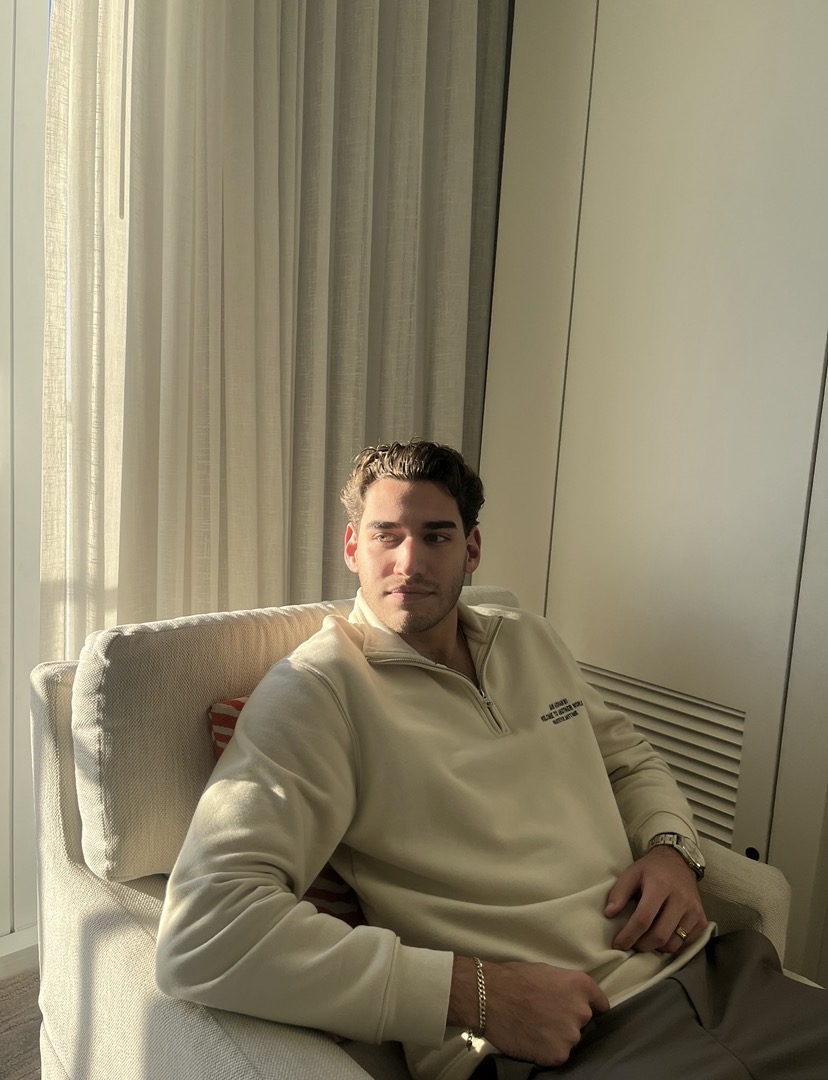
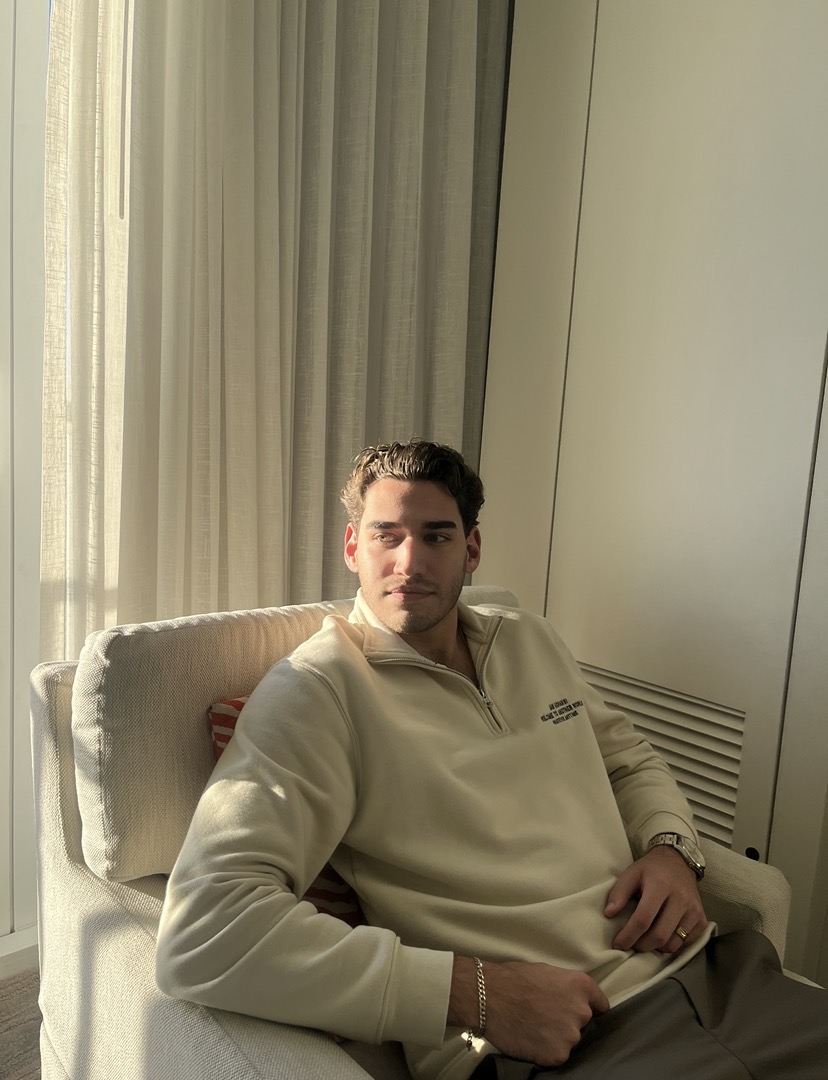
Photo courtesy of Jesus Cruz.




Leave a Reply