
Every November, America argues about a pie it did not invent in the form it loves most. Pumpkin pie gets the magazine covers; sweet potato pie gets the family. In Black households across the South — and everywhere the Great Migration carried Southern families, to Chicago, Detroit, Oakland, New York — Thanksgiving is not properly seated until a sweet potato pie is on the sideboard, usually more than one, because the first is spoken for before dinner starts.
The pie’s roots run through West Africa by way of the yam. Enslaved West Africans knew the yam intimately — it was a staple and a ceremony food at home — and in the Americas they met the sweet potato, a different plant entirely, and recognized it as kin. Enslaved cooks, working in plantation kitchens with European pie crusts and African memory, built the dish between those two worlds: an African root, roasted and mashed the way home taught them, sweetened and spiced, set into a crust the big house demanded. Sweet potato pie is not an imitation of pumpkin pie. It is older in spirit than the country that serves it — a survival recipe that became a celebration recipe, which is the whole history of soul food in one tin.
The distinction matters at the table, and cooks will correct you if you blur it. Pumpkin is a squash — watery, mild, a vehicle for spice. Sweet potato is dense, naturally sweet, almost caramel when roasted, and it makes a filling with body: silky but substantial, the color of late-afternoon light. The spice stays in a supporting role — cinnamon up front, nutmeg behind it, a whisper of ginger and lemon to keep the sweetness honest. And the texture is the signature: no gelatin, no stiffness. A slice should stand, but just barely, and sigh a little when the fork goes in.
In 2015 the pie had its pop-culture coronation when Patti LaBelle’s store-bought version sold out across the country after a fan’s joyful video review — but home cooks received the news the way grandmothers receive all news about their own inventions: with patience. The pie never needed discovering. It needed, at most, a wider table. This is that table’s recipe — roasted, not boiled, because roasting concentrates the sugars; mashed by hand, because the strings must come out and the crumb must stay honest; and baked the day before, because a sweet potato pie, like most things worth keeping, is better after a night to think about itself.
The Recipe
Makes one 9-inch pie (8 slices) · About 1 hour 45 minutes, plus cooling — best made a day ahead
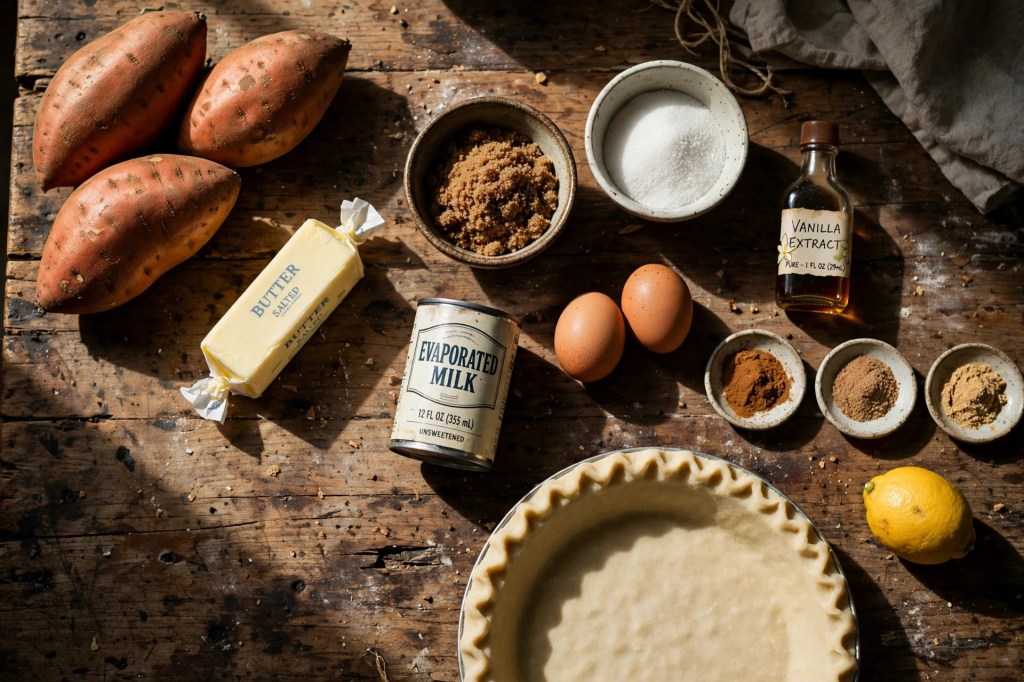
For the filling
- About 900 g (2 lbs) sweet potatoes — deep-orange Garnet or Jewel, 2–3 medium
- 115 g (½ cup / 1 stick) unsalted butter, softened
- 100 g (½ cup) packed dark brown sugar
- 100 g (½ cup) white sugar
- 120 ml (½ cup) evaporated milk
- 2 large eggs, at room temperature
- 1½ tsp vanilla extract
- 1 tsp ground cinnamon
- ½ tsp ground nutmeg, freshly grated if possible
- ¼ tsp ground ginger
- 1 tsp lemon juice (brightens the filling; traditional in many family versions)
- ¼ tsp fine salt
For the crust
- One unbaked 9-inch pie crust, homemade or a good store-bought shell, kept cold until filling
Method
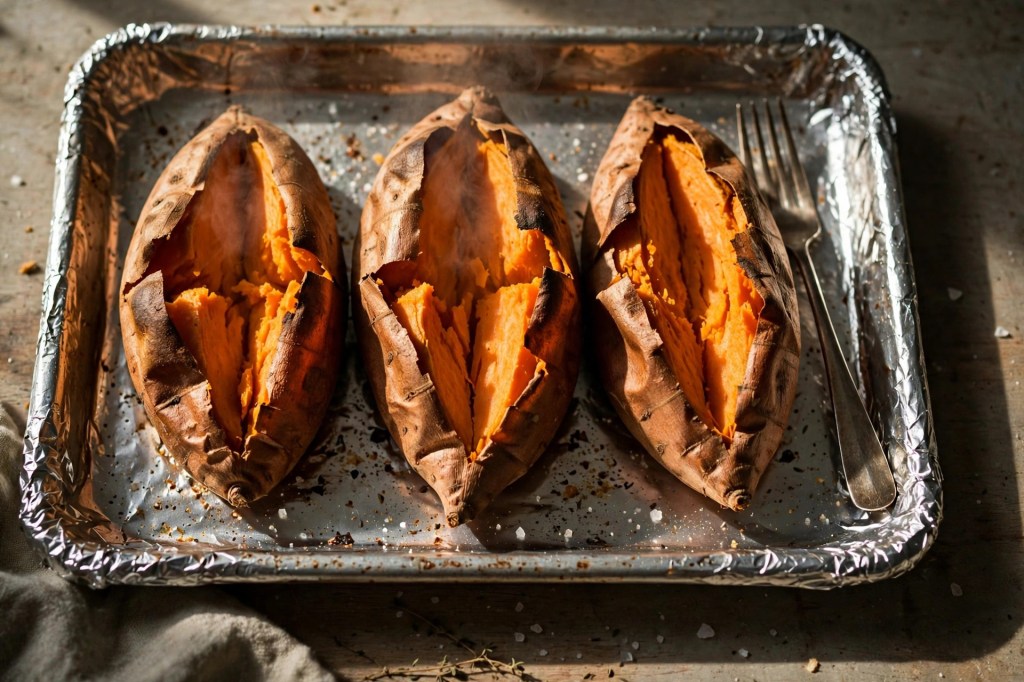
- Roast the sweet potatoes. Heat the oven to 400°F (200°C). Prick the potatoes, set them on a foil-lined tray, and roast 45–60 minutes, until they slump and their skins slip and a knife slides through with no resistance. Roasting — never boiling — is the first rule: boiling waterlogs the flesh and dilutes the very sweetness the pie exists for. Cool until you can handle them, then slip the skins off.
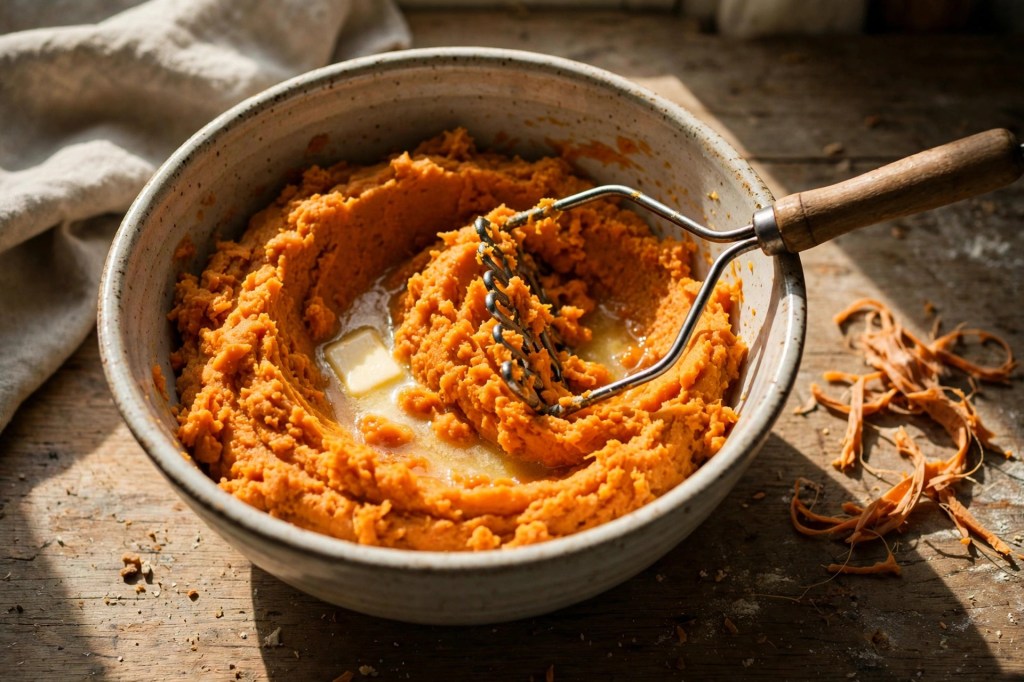
- Mash by hand, and pull the strings. Mash the flesh in a large bowl with a masher or fork until smooth. Sweet potatoes carry fibrous strings; work them loose as you mash and pull out any that gather — they are the difference between a silky pie and a stringy one. Beat in the softened butter while the flesh is still warm so it melts through.
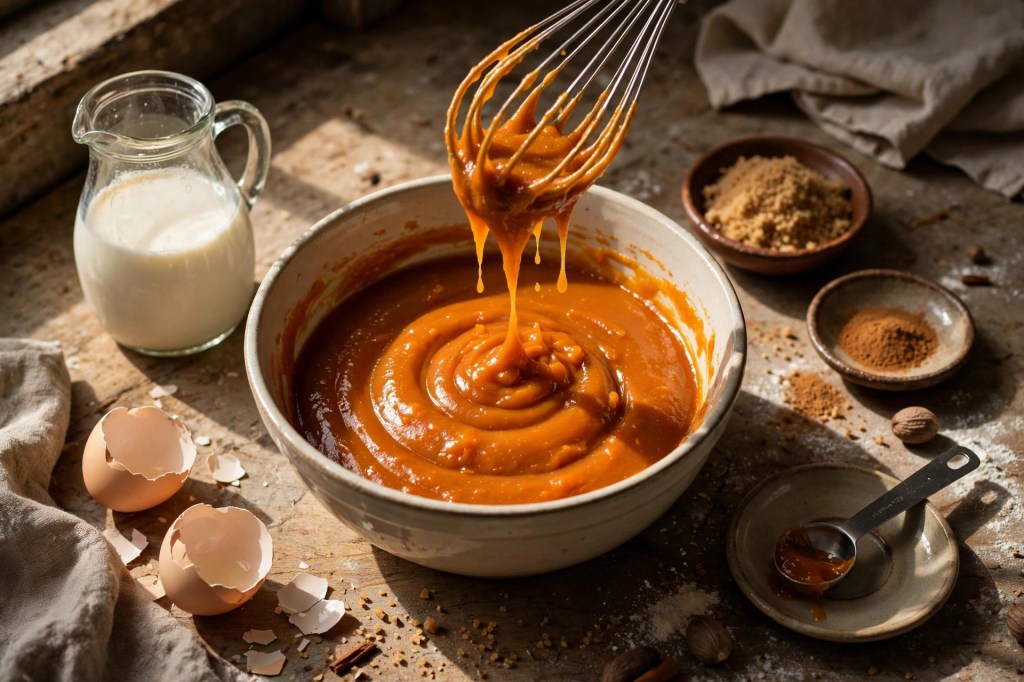
- Build the filling. Whisk in the brown and white sugars, then the eggs one at a time, then the evaporated milk, vanilla, cinnamon, nutmeg, ginger, lemon juice, and salt. The filling should be glossy and pourable, the color of burnt orange. Taste it raw — cooks have always tasted it raw — and adjust: a pinch more nutmeg if it reads flat, a squeeze more lemon if it reads heavy.
- Fill the crust. Set the cold crust in its tin on a baking tray. Pour the filling in and smooth the top. The tray matters — a filled pie tin is a wobbling thing, and the tray is your insurance on the way to the oven.
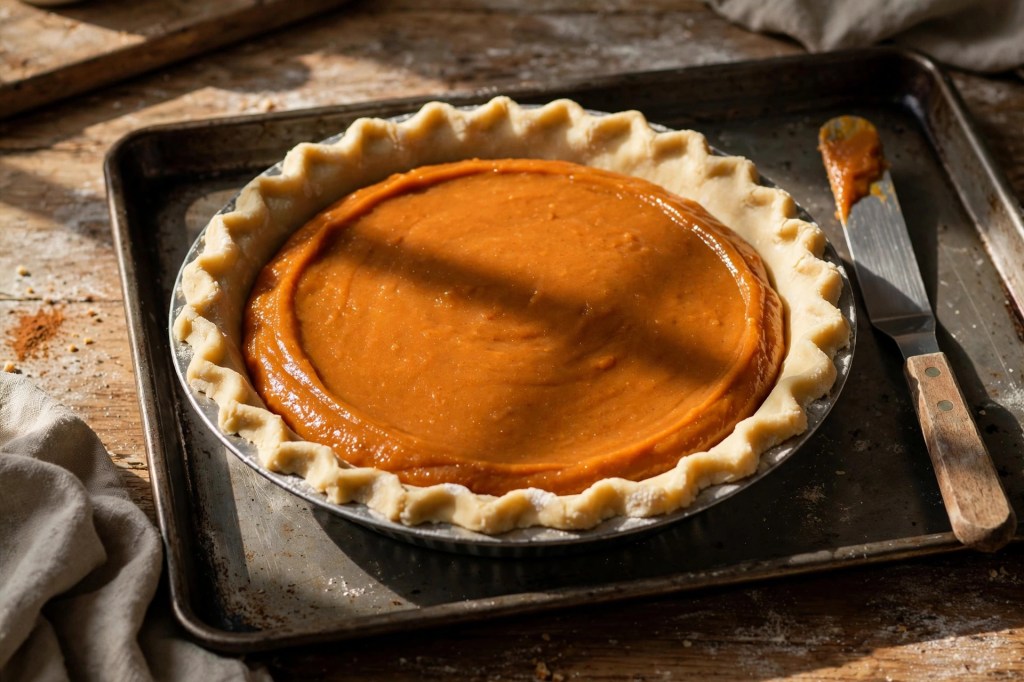
- Bake low enough to set, not scramble. Bake at 350°F (175°C) for 50–60 minutes, until the edges are set and puffed slightly and the center still has a gentle wobble — a custard’s wobble, not a liquid slosh. If the crust edges brown too fast, shield them with foil for the last stretch. The pie finishes setting as it cools; an overbaked sweet potato pie cracks and goes grainy, and patience at this step is the whole difference.
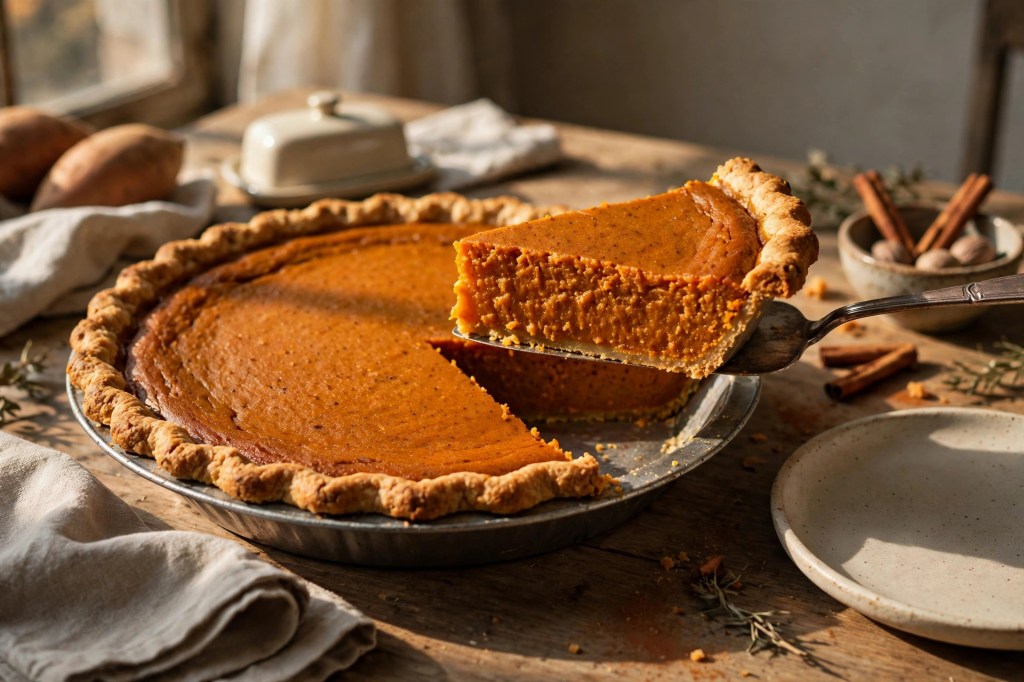
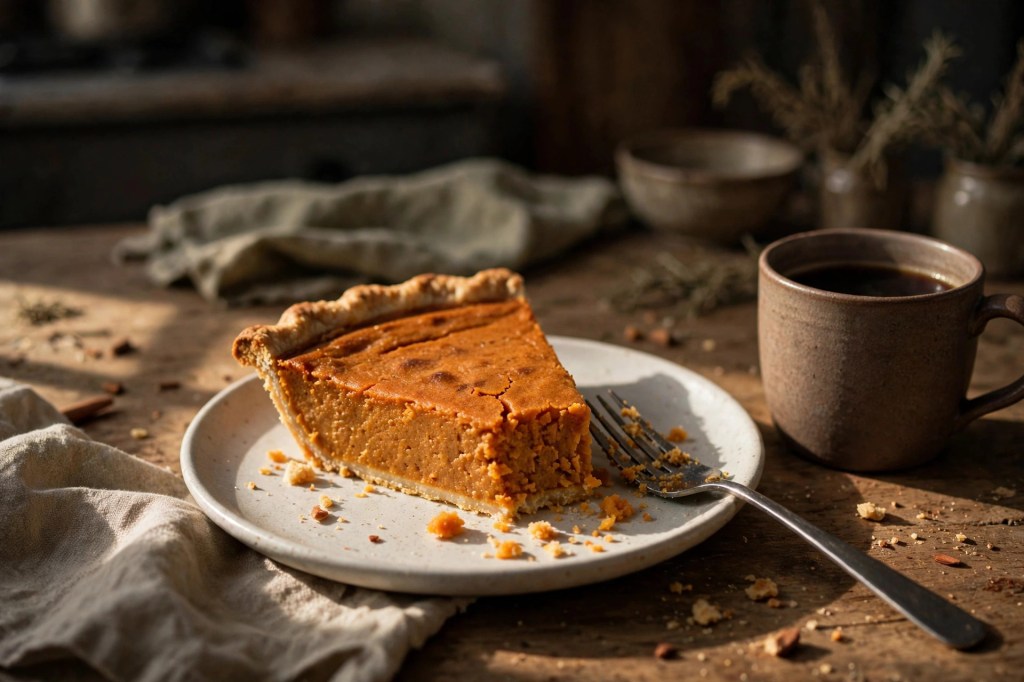
- Cool, rest, serve. Cool completely on a rack — at least 2 hours, overnight in the refrigerator is better and traditional. Serve at room temperature or barely warm, plain, the way it was built to be eaten. Whipped cream is permitted by most families and required by none.
Cook’s notes
- Roast, don’t boil. This is the hill the recipe dies on. Roasted sweet potatoes caramelize their own sugars; boiled ones take on water the pie then has to forgive.
- The strings are the gate. Every fibrous string left in the bowl is a string in someone’s slice. Two extra minutes with the masher is the cheapest quality control in the recipe.
- Make it Wednesday. Baked the day before Thanksgiving, the spices settle and the crumb firms into its best self — and one dessert is already done when Thursday’s kitchen fills up. This is not a shortcut; it is the tradition working as designed.
- Pumpkin is not a substitute here. In a pinch the method will carry pumpkin, but the result is a different pie telling a different story. This entry is the sweet potato’s.
A closing note
One Pot, One World has spent the season traveling — Palestine, Mexico, India — and this week it comes home to an American table built by African hands. The pie on the sideboard is not a side dish in the story of this country. It is one of the documents. Bake it Wednesday. Let it rest. Slice it Thursday, and know what you are serving.
Next in the series: Latkes, for Hanukkah.
— Yolande Baptiste, Food Editor




Leave a Reply