
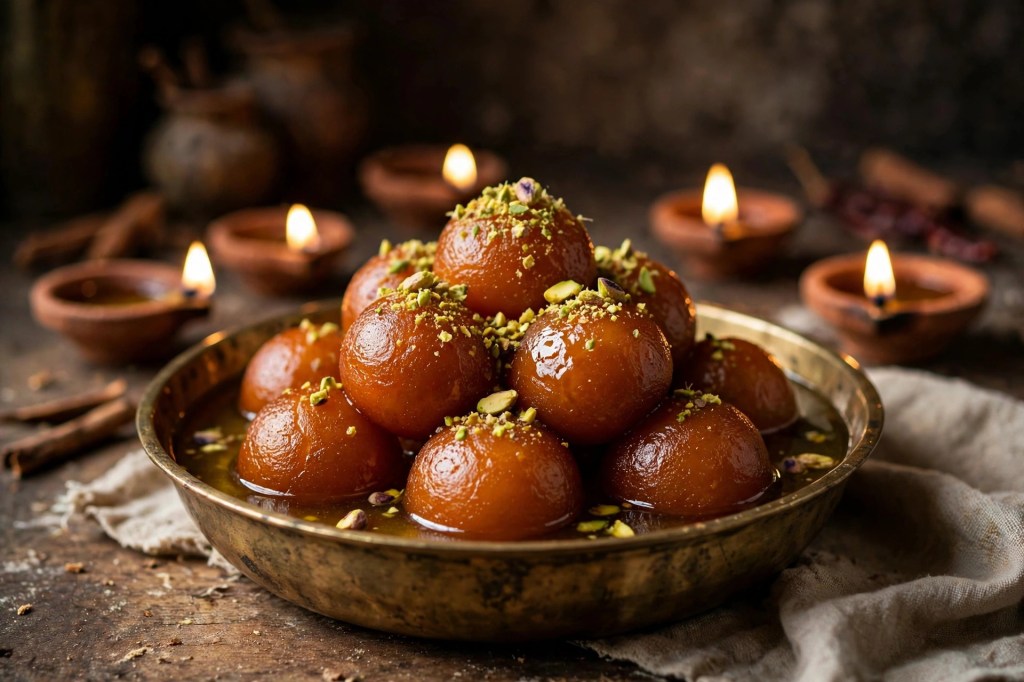
Diwali is a festival you can see from the street. For five nights in late autumn, homes across India and the Indian diaspora set out rows of small clay oil lamps — diyas — in windows, on steps, along rooftops, until whole neighborhoods carry a second, warmer skyline at ankle height. The festival celebrates light pushing back darkness and good outlasting evil; families clean the house, wear new clothes, visit each other, and exchange sweets. Not a sweet. Sweets — boxes and trays of them, mithai, moving house to house like edible greeting cards. And the sweet that anchors more of those boxes than any other is this one: gulab jamun, deep-amber balls of milk dough, fried slow and then drowned — there is no other honest word — in rose and cardamom syrup.
The name is a small map of the dish’s own travels. Gulab comes from the Persian for rose water, jamun is a dark purple Indian fruit the finished sweet happens to resemble. The technique arrived with Persian influence and stayed to become so thoroughly Indian that Diwali without it reads as an oversight. The body of the sweet is milk, concentrated: traditionally khoya, milk cooked down for hours to a soft solid; the home version below uses whole-milk powder, which is the standing shortcut in Indian home kitchens and diaspora apartments alike, and produces the same dense, tender, almost fudge-like crumb — provided the frying is patient, which is the entire secret and the subject of the cook’s notes.
What nobody warns you about, the first time: a gulab jamun is mostly syrup by the time it reaches your mouth. The frying builds the structure; the soak is the dessert. A good one is not a cake ball with sauce on it. It is a sponge engineered by grandmothers to hold roughly its own weight in rose water, cardamom, and saffron, and to surrender all of it at the first bite. Served warm, it is one of the great arguments for festivals that last five days.
The Recipe
Makes about 20 jamun · About 1 hour, plus at least 2 hours soaking (overnight is better)
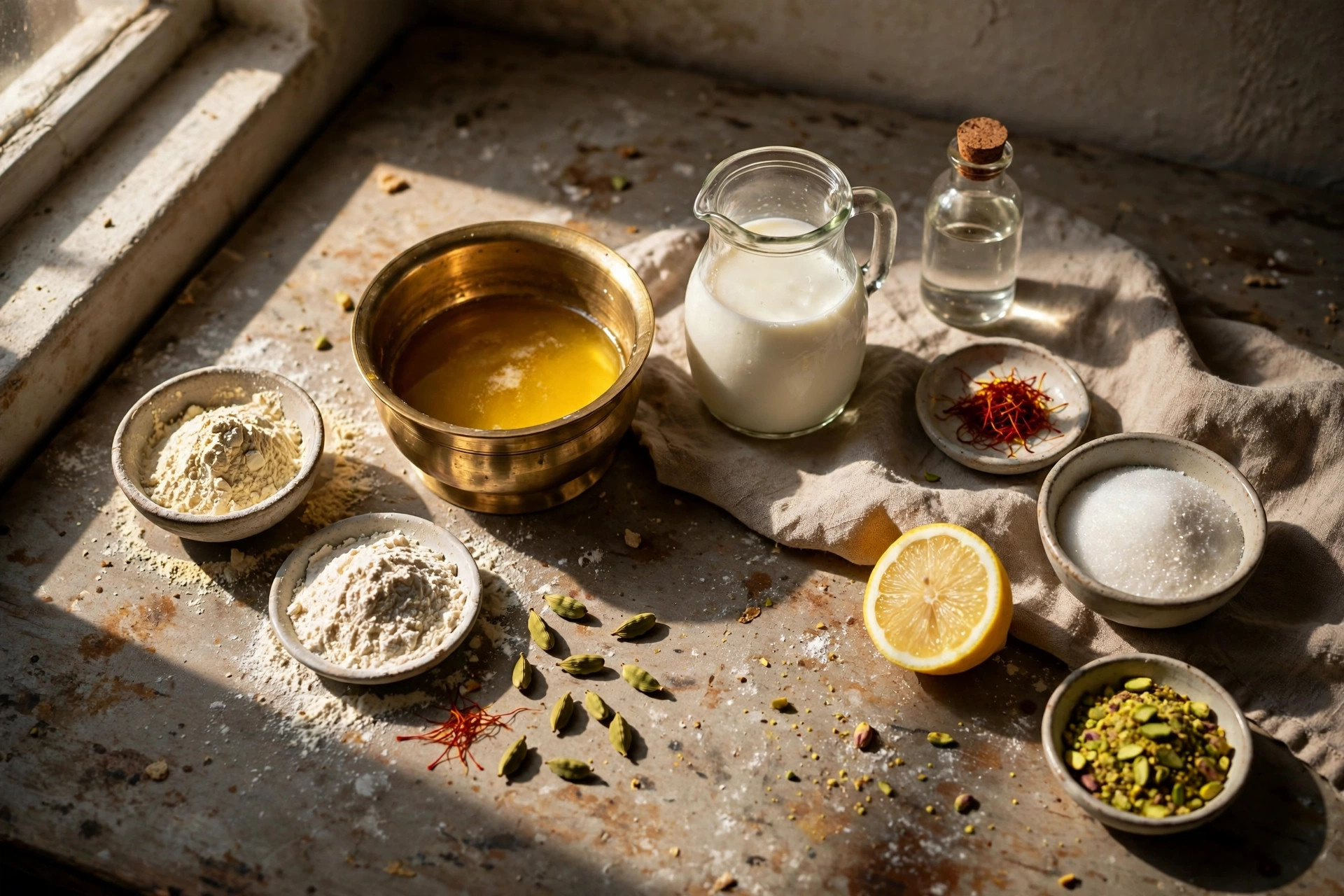
For the syrup
- 300 g (1½ cups) sugar
- 360 ml (1½ cups) water
- 6–8 green cardamom pods, lightly cracked
- A pinch of saffron threads (optional, traditional for festivals)
- 1½ tsp rose water
- 1 tsp lemon juice (keeps the syrup from crystallizing)
For the dough
- 125 g (1 cup) whole-milk powder (not skim — the fat is the texture)
- 40 g (⅓ cup) all-purpose flour
- ½ tsp baking soda
- ¼ tsp ground cardamom
- 2 Tbsp ghee, melted (or unsalted butter)
- 60–80 ml (¼–⅓ cup) warm whole milk, added a spoonful at a time
- Ghee or neutral oil, for frying (enough for the balls to float)
- Crushed pistachios, to finish
Method
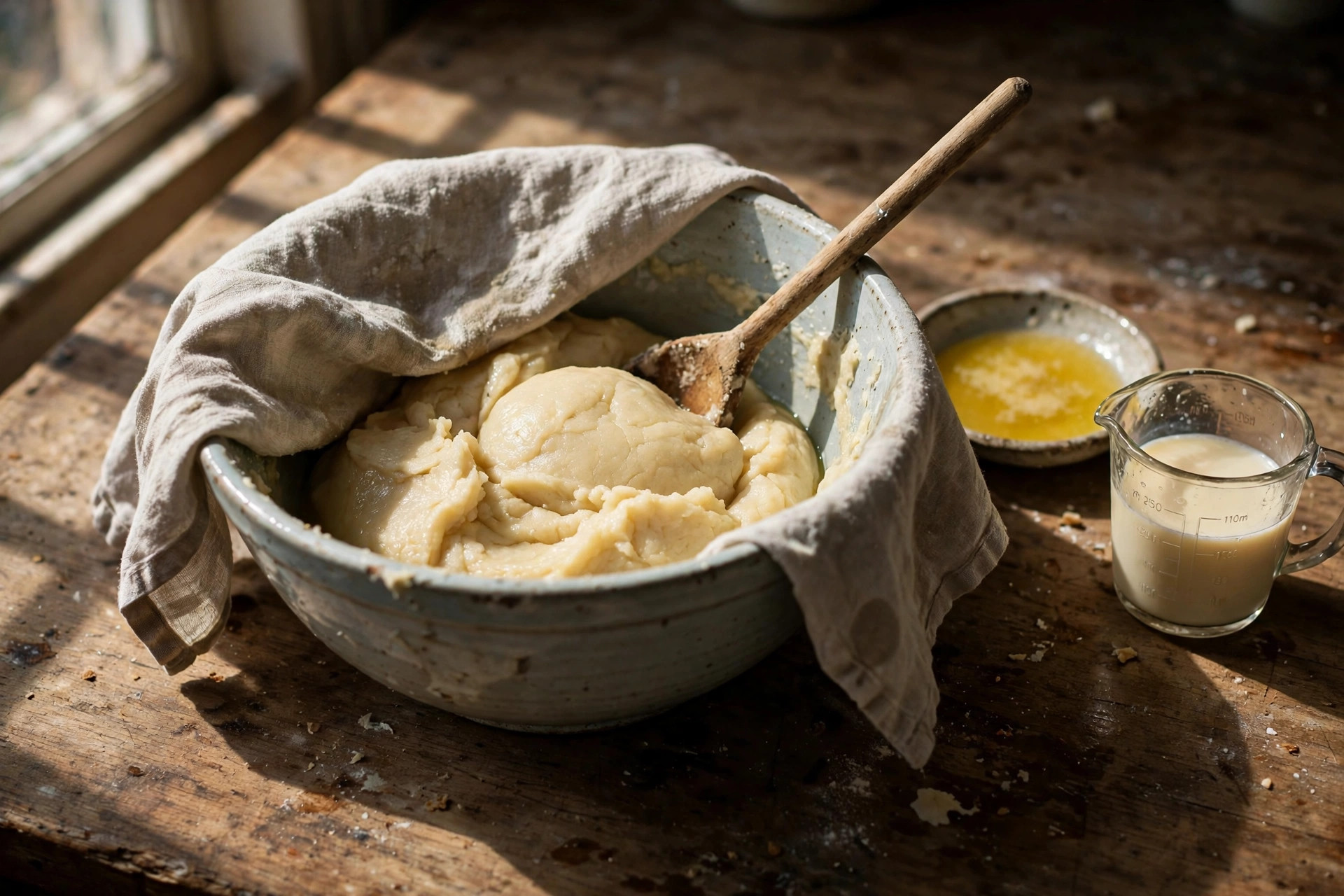
- Make the dough. Whisk the milk powder, flour, baking soda, and ground cardamom. Rub in the melted ghee, then add warm milk a spoonful at a time until a soft, slightly sticky dough forms — softer than bread dough, never stiff. Cover with a damp cloth and rest 10 minutes; the milk powder drinks as it sits, and the dough firms to a smooth, pliable mass.
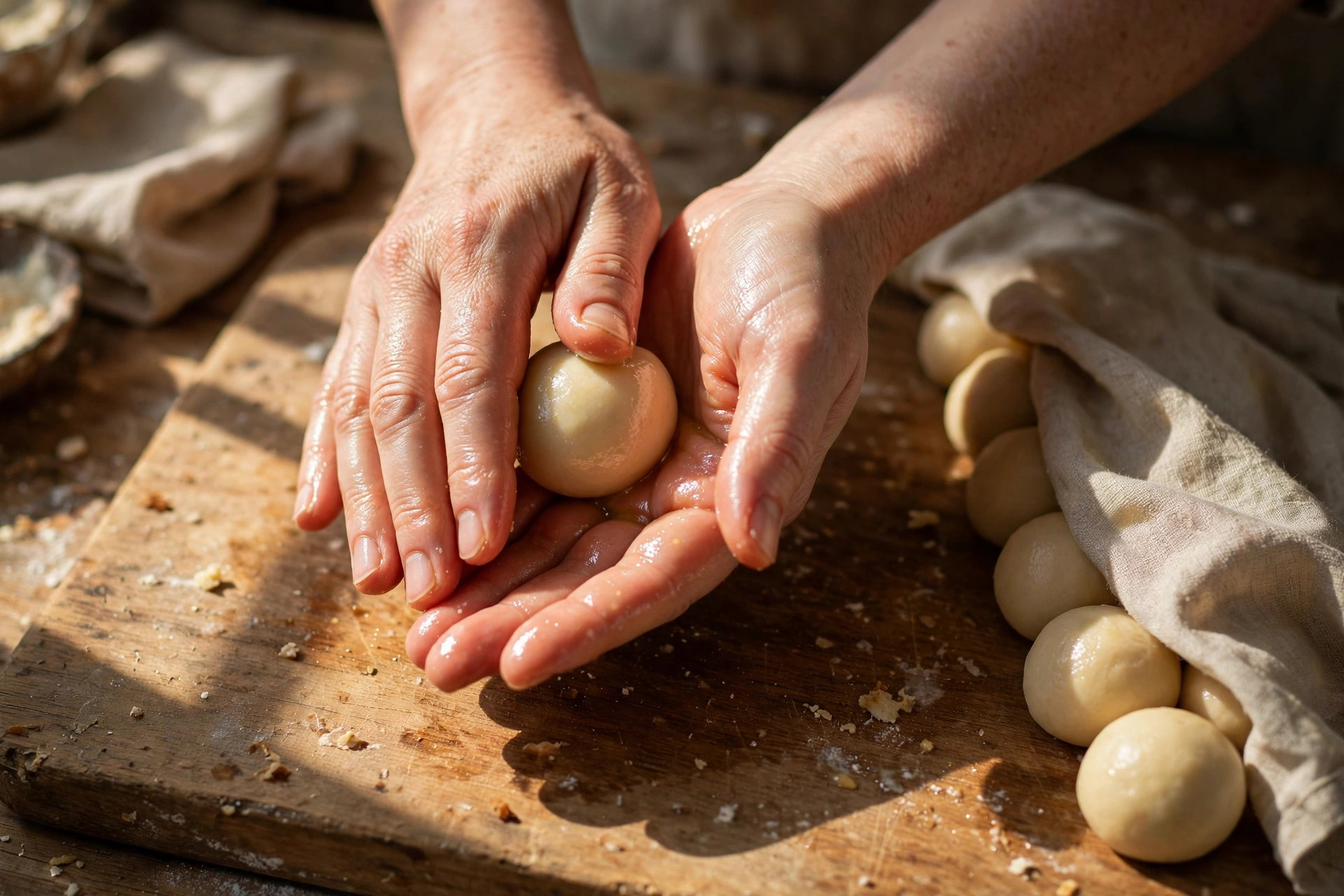
- Roll the balls. Grease your palms lightly with ghee. Roll walnut-sized balls (about 1 inch) — smooth and crack-free is the whole game, because every crack in the raw ball becomes a split in the syrup. If the dough cracks, your palms or a drop more milk fix it. You should get about 20. Keep them covered while you work.
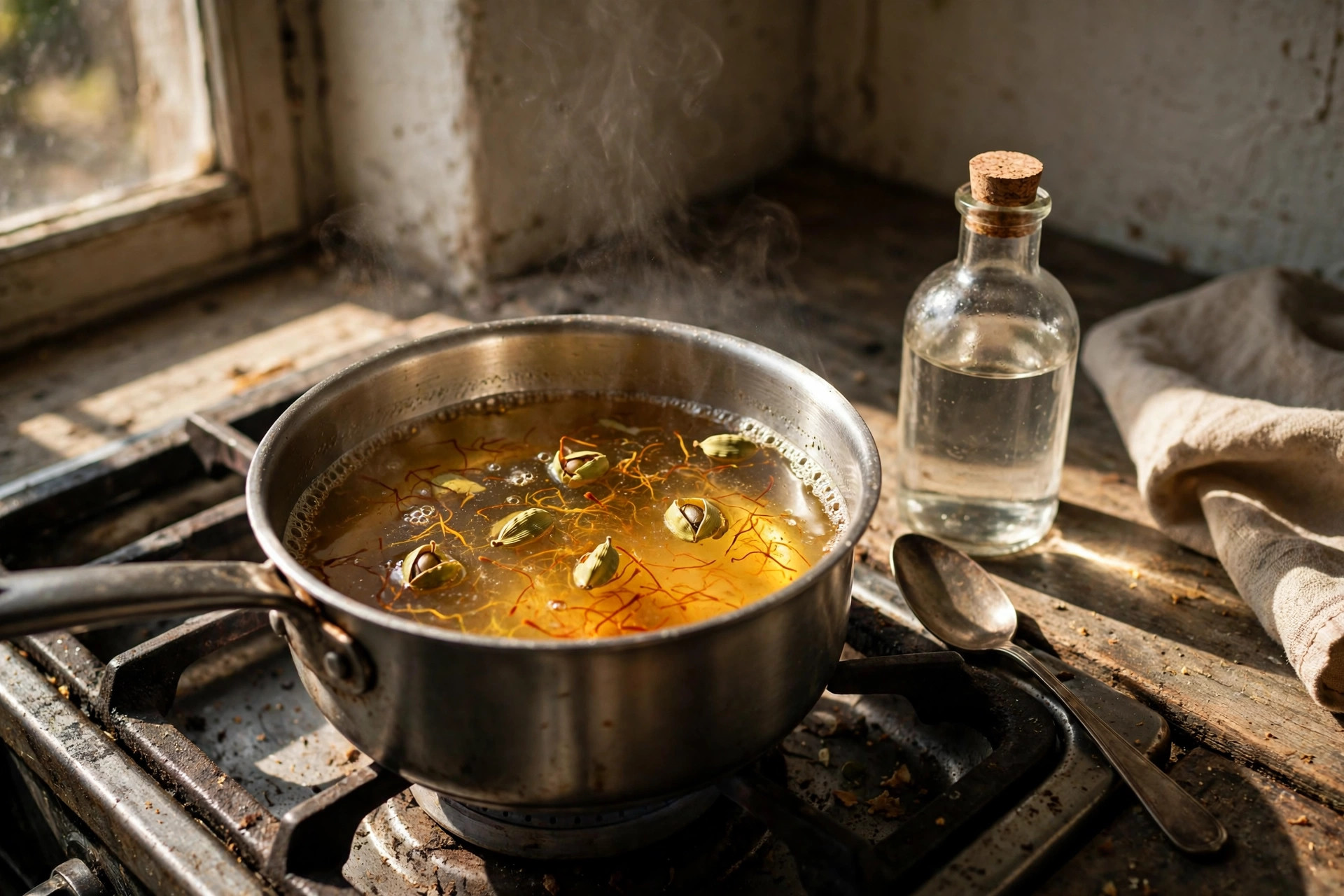
- Make the syrup first, before frying. Simmer the sugar, water, cracked cardamom, and saffron for 5 minutes, just until the syrup coats a spoon and feels sticky between finger and thumb — it should stay thin, never reach a thread. Off the heat, stir in the rose water and lemon juice. Keep it warm; cold syrup will not enter a hot jamun.
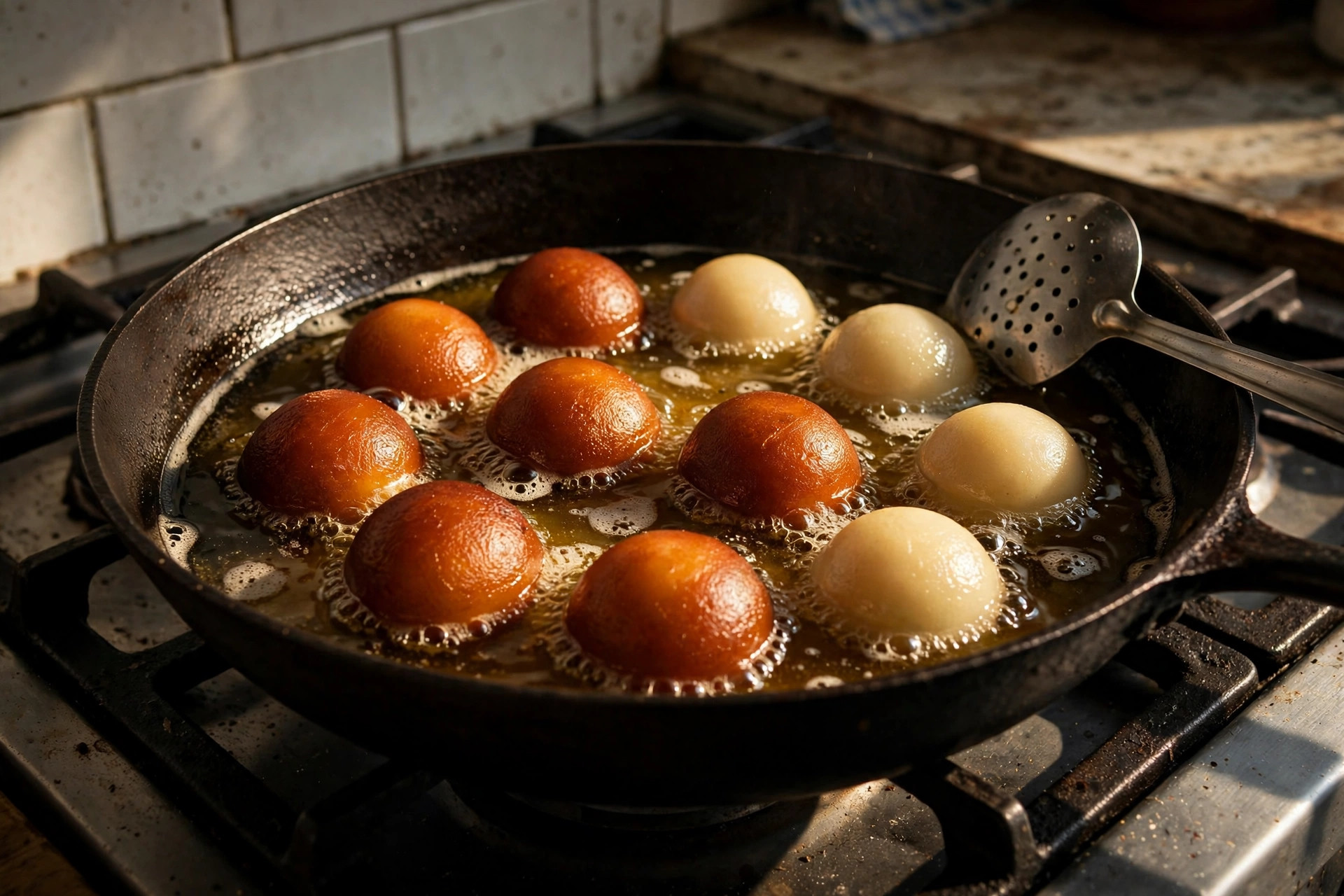
- Fry low and slow. Heat ghee or oil in a deep pan to about 300°F (150°C) — noticeably cooler than most frying. The balls go in and should sit a moment before rising, then be kept moving with a gentle swirl of the pan so they color evenly. Fry 6–8 minutes to a deep, even amber — mahogany is flavor; pale is raw in the middle. This patience is the recipe. Hot oil seals the outside and leaves the center doughy; low oil cooks the crumb through so it can drink.
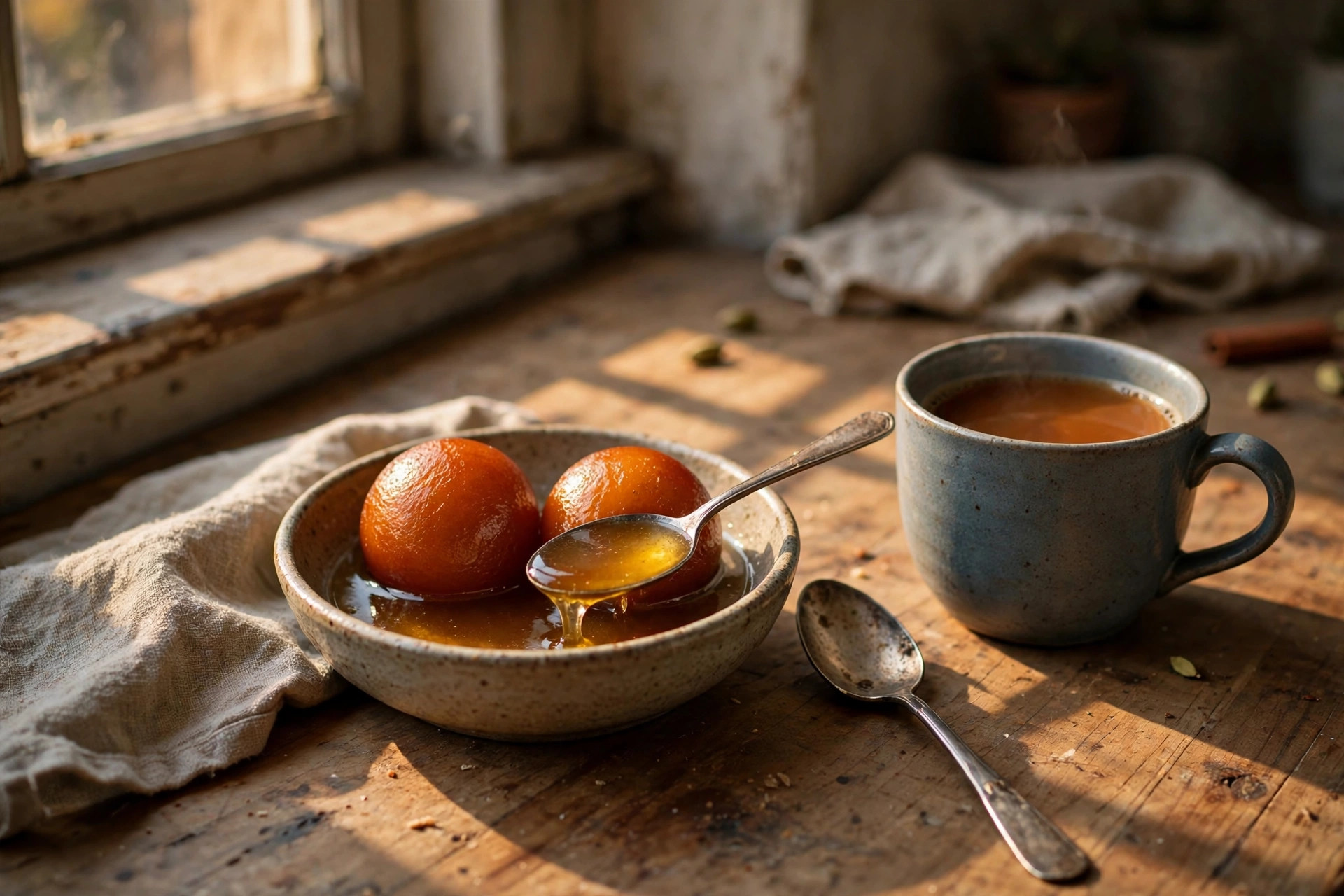
- Soak. Lift the jamun out with a slotted spoon, let the oil fall for a few seconds, and lower them straight into the warm syrup. They will look too big for the bowl within the hour — they swell as they drink. Soak at least 2 hours; overnight in the refrigerator, brought back to room temperature or gently rewarmed, is the festival standard.
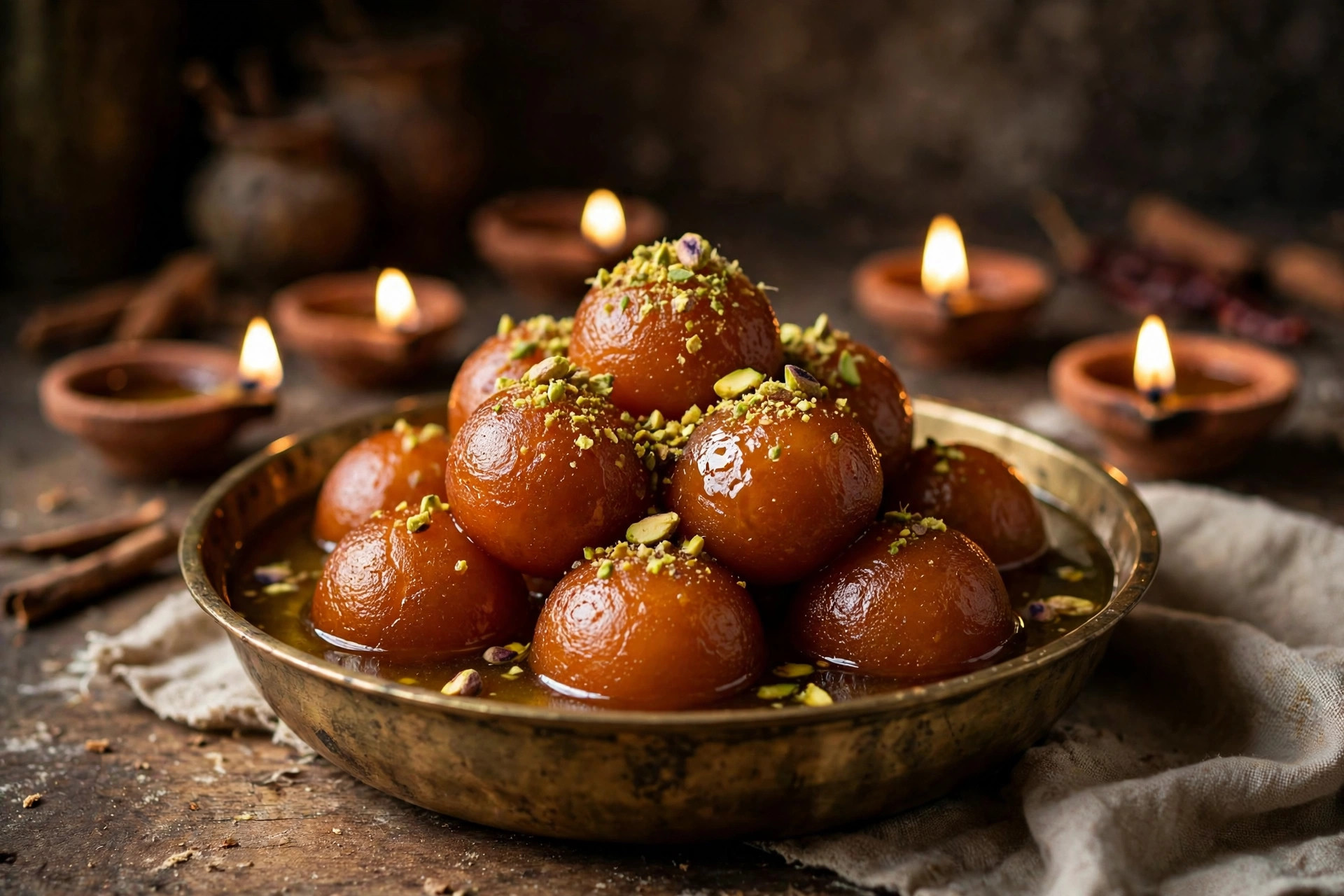
- Serve warm. Spoon two or three jamun per person with plenty of their syrup, crushed pistachio over the top. A small scoop of vanilla ice cream beside them is a modern restaurant habit that home cooks have cheerfully adopted; nobody at Diwali will stop you.
Cook’s notes
- The fry is the recipe. Every failed gulab jamun — hard, doughy-centered, cracked, greasy — is a frying-temperature story. Low, slow, constantly moving. If you make one adjustment on a second batch, make it there.
- Cracks are information. A cracking dough wants a spoonful more milk and a two-minute rest, not more flour. More flour is how jamun become golf balls.
- Syrup discipline. Thin syrup soaks; thick syrup coats and stops at the door. If yours thickened while you fried, a splash of hot water returns it to duty.
- Khoya, for the traditionalists. Where South Asian grocers sell fresh or frozen khoya (mawa), grate about 200 g of it in place of the milk powder and milk, keeping the flour, soda, and ghee — the method and the patience are unchanged.
- Make them ahead; Diwali rewards it. Jamun keep a week refrigerated in their syrup and improve for the first two days. This is a sweet designed by a festival that knew guests arrive on their own schedule.
Mexico taught the column to feed the ones who come back. India answers with light: twenty small sweets, soaked in rose, set out in a row like the lamps in the window — the same lesson in a third language, that a table is how a family says the dark does not get the last word. Next, the column comes home to the American South ahead of Thanksgiving: sweet potato pie, Mon Nov 23, in time to bake for Thursday.
— The Editorial Board






Leave a Reply