Everybody is complaining about AI. Making art with it is not art, they say. It is not creativity. The machine did the work; no hand suffered; no soul was involved. Case closed.
But what if I told you the thing on the canvas is not the art?
The work on canvas is the execution of the art. It is paint doing what it was told. The art itself happened earlier, in the one place no camera has ever recorded: inside the artist’s head, at the moment the idea arrived and the artist had the audacity to believe it could be made real.
Consider a conqueror. Before anyone conquers anything, they must first have the audacity to think they can conquer. That thought — that private, unverifiable moment of nerve — is the real conquest. Everything after it is logistics. The soldier’s bruises, the casualties of war: those are not the conquest. They are evidence of it. And evidence, as any honest person knows, is an unreliable narrator. The bruises may not truly represent the war. The history books may not truly represent the idea that started it. The evidence survives; the thinking that caused it is gone, except in the traces it left behind.
A painting is exactly that kind of evidence.
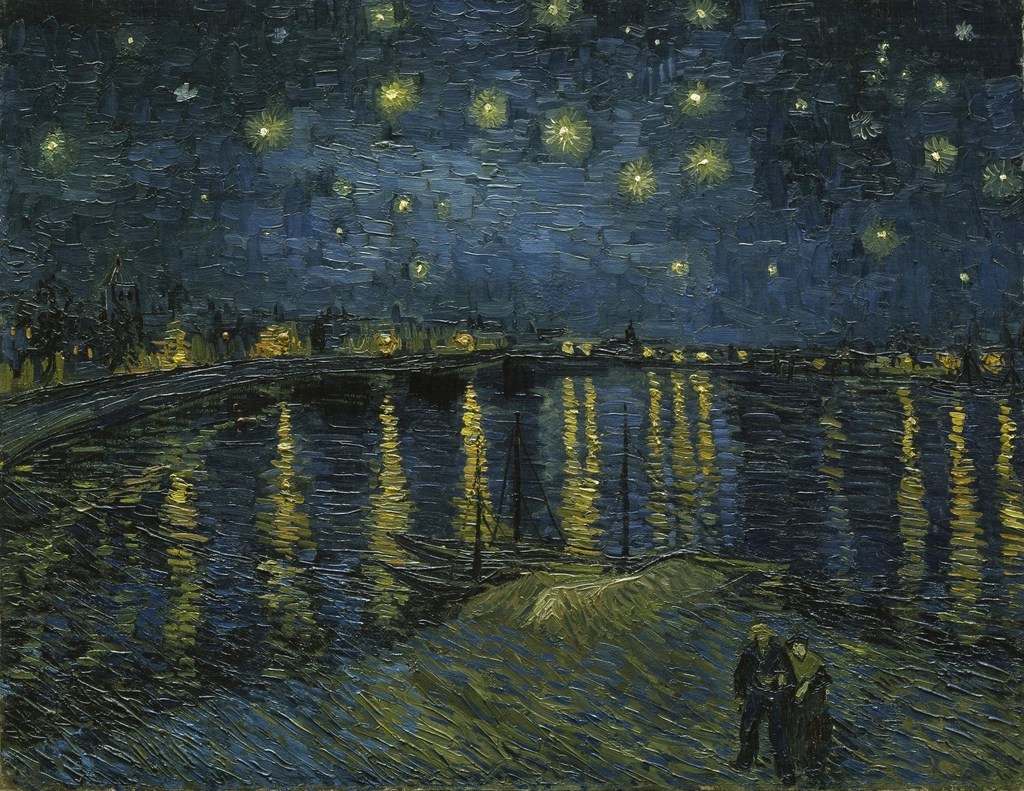
Sit in front of a Van Gogh. People do it every day, in every great museum of the world — they sit, and they stay, sometimes for what feels like days, lost in wonder. But look closely at what they are actually wondering about. Not the paint. Nobody sits for hours marveling at linseed oil. They are wondering: What was he thinking? What was happening inside that man’s mind when he made this? What did he see that the rest of us couldn’t? What was the idea?
That is the true art. The idea. The canvas in front of you is the closest the artist could get to showing it to you — a report from a country you cannot visit, filed in pigment. Sometimes the report is faithful. Sometimes it falls heartbreakingly short; Van Gogh died believing his reports had failed. But the art was never the report. The art was the country.
Once you see this, you cannot unsee it, and it rearranges the whole argument about AI. The idea presents you with an opportunity: to create something as close to the idea as possible. That has always been the artist’s actual job — not to suffer beautifully, but to close the distance between what was imagined and what can be shown. Every tool in art history is a distance-closing device. The camera obscura. The workshop assistant. The printing press. Nobody asks whether the general personally swung the sword; we ask whether he conceived the campaign.
AI is the exercise of ideas at its truest form. Understood this way, it offers something no tool has ever offered before: a way to conquer without the casualties associated with war. The execution — the bruises, the blown budget, the decade of apprenticeship, the canvases ruined on the way to the one that worked — is handed to the machine. What remains with the human is the part that was always the art: the audacity to think it, and the judgment to know when the evidence is close enough to the idea to sign your name to it.
None of this means every AI image is art, any more than every canvas is. Most canvases are evidence of very small ideas. The new questions are the old questions wearing better clothes: Was there a real idea? Was it yours — did you have the nerve to think a thought nobody had handed you? And when the machine brought back its evidence, could you tell the faithful report from the flattering one?
The complaints assume art lives in the hand. It never did. The hand is a courier. Art lives where it has always lived — in the dangerous, unaudited moment when a person looks at nothing and decides: that could exist, and I am the one who will make it exist.
The bruises were never the conquest. They were just the proof somebody showed up. The conquest was the thinking. It still is.
By Carmen Delgado, Art Editor


Leave a Reply