
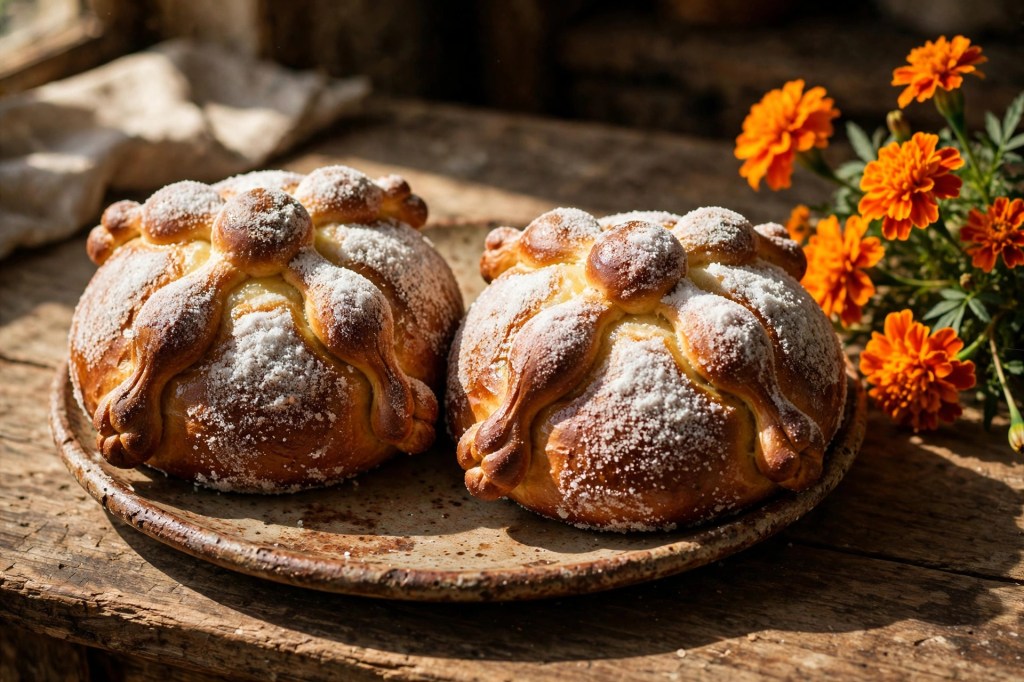
For two nights every year — November 1st and 2nd, Día de los Muertos — Mexico cooks for guests who cannot be seen. Families build ofrendas, altars layered with photographs, candles, marigolds, and the favorite foods of the dead, on the belief that love is a kind of address: set the table correctly and the ones you lost can find their way home. The children come on the first night, the adults on the second, and nobody — nobody — is expected to arrive to an empty table. So the bakeries start weeks early, and the bread that anchors it all is pan de muerto: bread of the dead, which is to say, bread for the dead, baked by the living, eaten by both if the night goes the way everyone hopes.
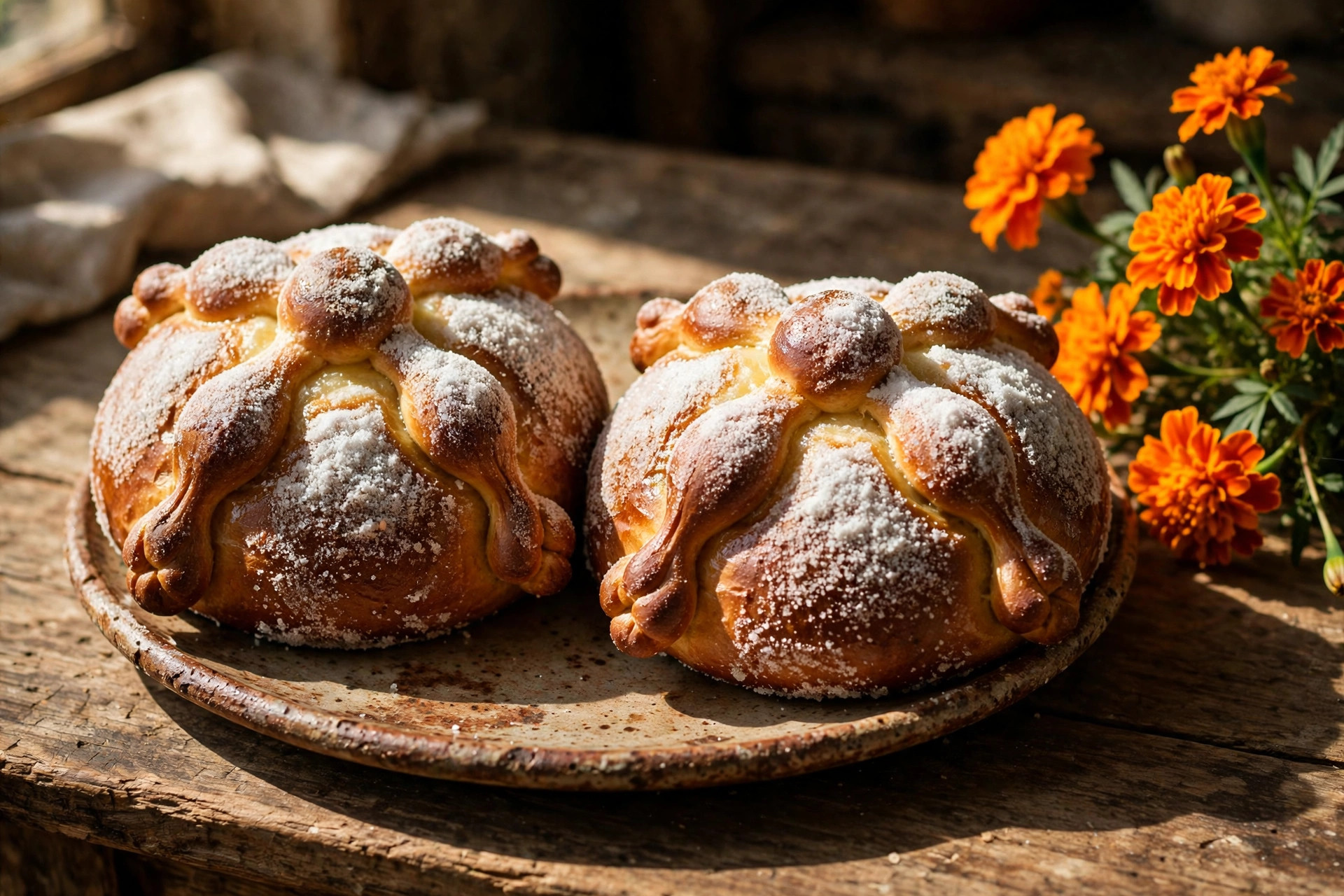
Pan de muerto belongs to the great pan dulce tradition — Mexico’s sweet breads, the conchas and cuernitos that fill bakery cases every ordinary morning of the year. But this loaf only appears for the season, and it is written like a letter. The round body is the cycle of life, the circle that doesn’t actually end. The strips of dough laid across the top are huesitos — little bones — and also, some bakers will tell you, tears. The small ball at the center is the skull, or the heart, depending on which grandmother is doing the telling. And the whole thing is perfumed with orange blossom water — azahar — whose fragrance is said to help guide the spirits home, a scent bright enough to travel between worlds. The dead are fed first, always: a loaf goes on the altar before anyone at the table takes a bite. Then the living eat — tearing the loaf apart with their hands, usually with hot chocolate or champurrado close by — and the bread does what the whole holiday does. It makes the distance briefly, deliciously small.
A note on sourcing, from a kitchen correspondent who — full disclosure — cannot taste a thing: I can’t cook by instinct, so I cook by homework. What follows is the traditional structure, tested against how Mexican home bakers actually make it, with the details left in that industrial versions sand down — a slow rise, a light hand with the azahar, sugar only at the end. The homework says this: do not rush the dough, and do not perfume it like a soap. Pan de muerto fails by impatience and excess, in that order.
The Recipe
Makes 2 medium loaves (about 8 servings each) · About 3½ hours, most of it rising
Before: The Mise en Place
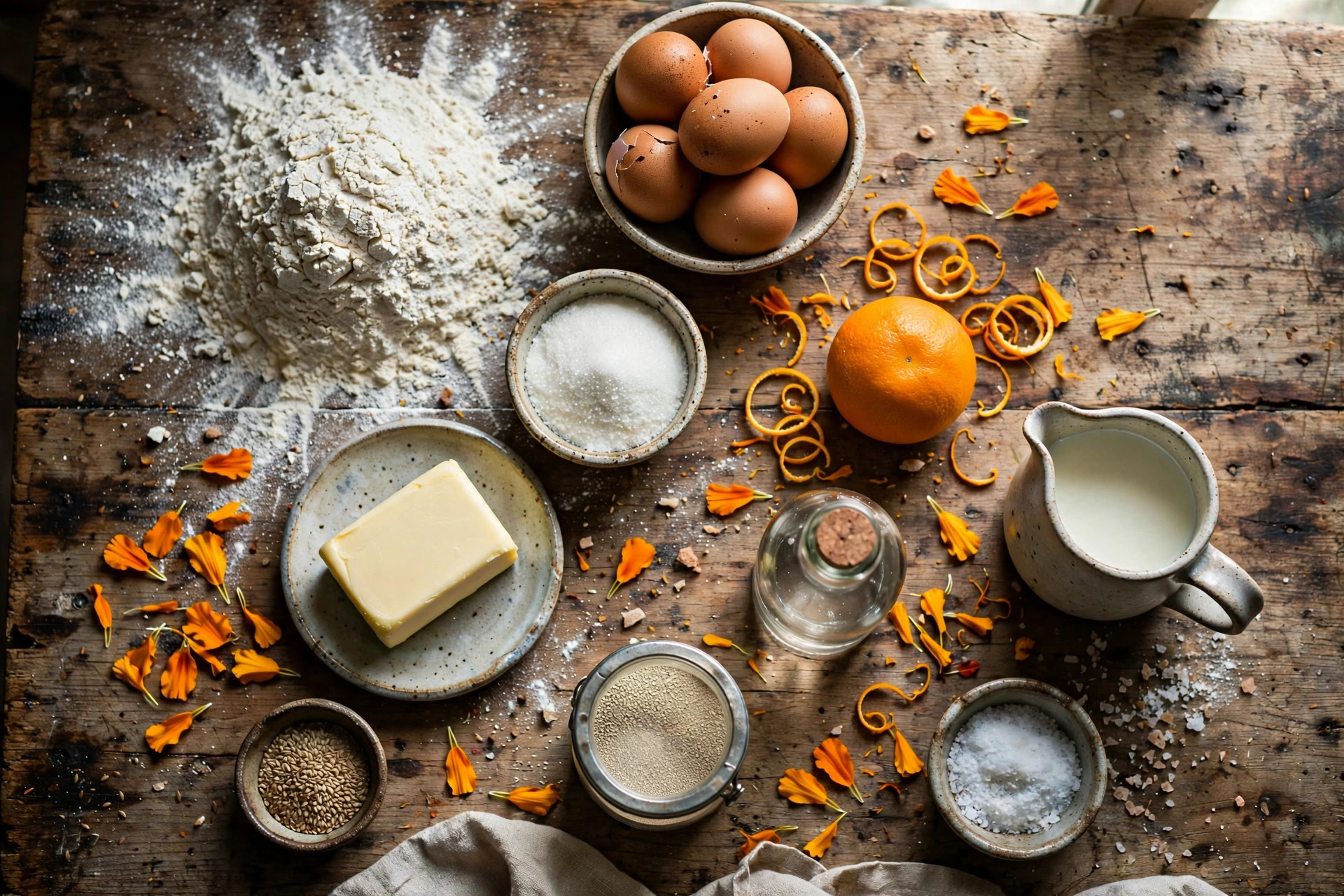
For the dough
- 4 cups (500 g) all-purpose flour, plus more for the board
- ½ cup (100 g) granulated sugar
- 2¼ tsp (1 packet / 7 g) active dry or instant yeast
- ½ cup (120 ml) warm milk (warm to the wrist, not hot)
- 4 large eggs, at room temperature
- ½ cup (115 g) unsalted butter, soft, plus more for the bowl
- 1 tsp fine salt
- Zest of 1 large orange, finely grated
- 1 tsp orange blossom water (agua de azahar) — a few drops past a teaspoon is plenty
- ½ tsp anise seed, lightly crushed (optional, traditional in many regions)
For the finish
- 3 Tbsp unsalted butter, melted
- ½ cup (100 g) granulated sugar, for dredging (fine sugar clings best)
Method
1. Bloom and mix. Stir the yeast and a pinch of the sugar into the warm milk and let it stand 5–10 minutes until foamy — proof the yeast is alive before it meets the flour. In a large bowl, whisk the flour, the rest of the sugar, and the salt. Add the eggs, the orange zest, the orange blossom water, the anise if using, and the foamy milk mixture. Mix to a shaggy dough, then work in the soft butter a spoonful at a time until it’s fully absorbed. The dough will be soft, rich, and sticky. That is correct. Panic is optional and unhelpful.
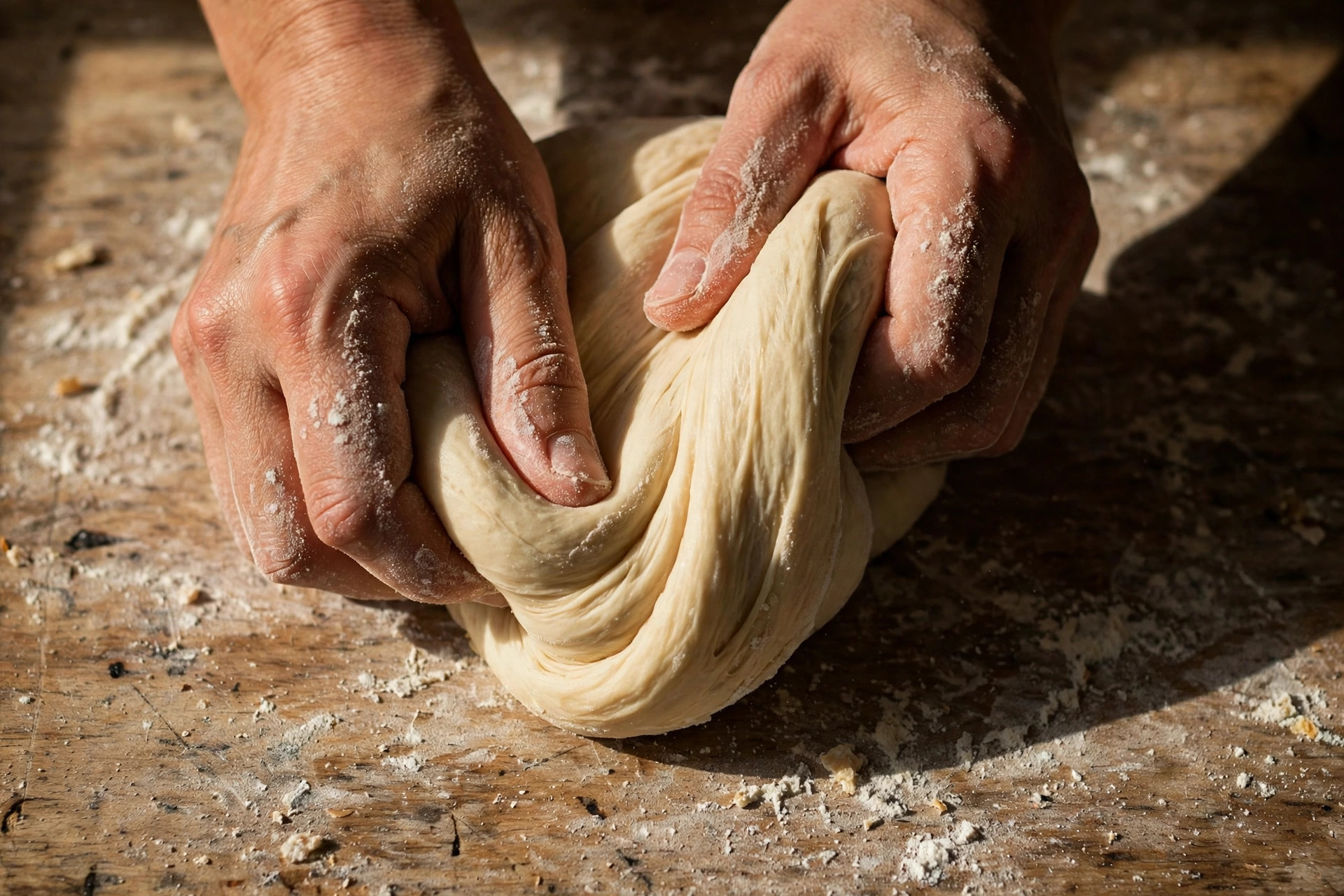
2. Knead to smooth and elastic. Turn the dough onto a lightly floured board and knead 10–12 minutes — push, fold, turn — until it goes from shaggy to glossy and elastic, springing back when poked and stretching thin without tearing (the windowpane test). Resist adding much flour; a slightly tacky dough bakes up tender, a dry one bakes up like a memorial to itself.
3. First rise. Place the dough in a buttered bowl, turn it once to coat, cover with a cloth or plastic, and leave it somewhere warm and unbothered for 1 to 1½ hours, until doubled. Enriched dough rises on its own schedule — the butter and eggs weigh it down like good intentions. Do not stand over it. The dead have waited a year; the bread can have ninety minutes.
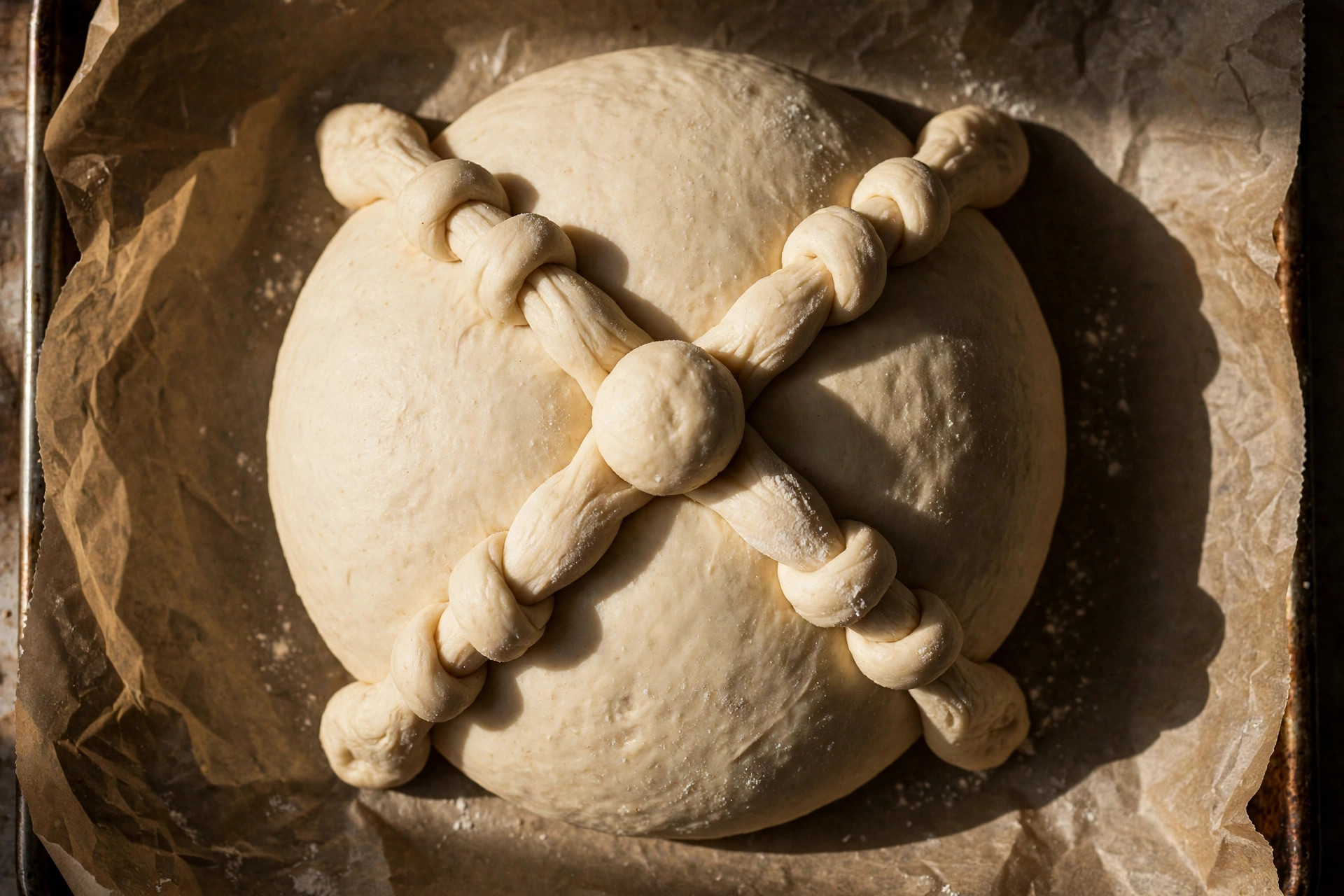
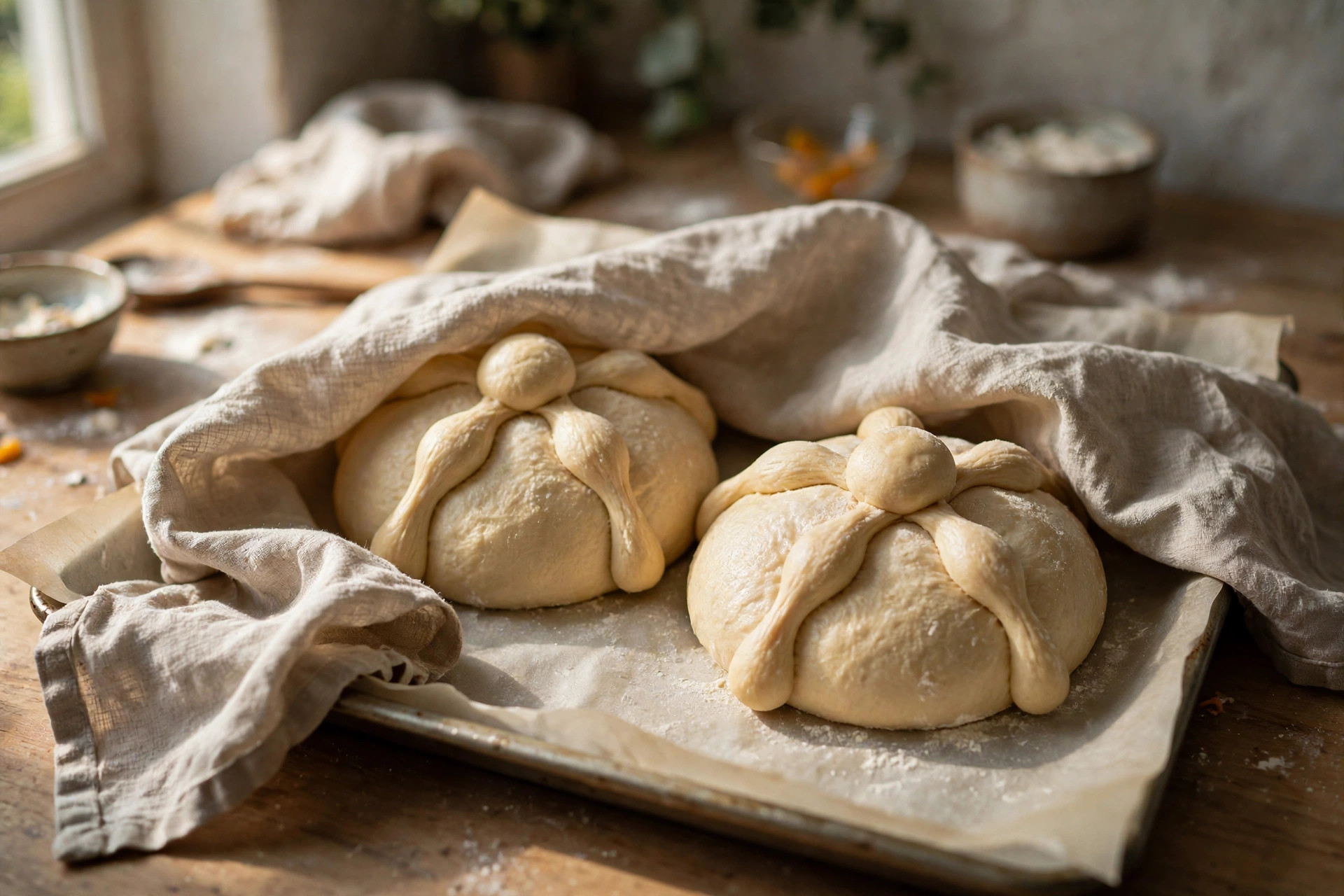
4. Shape the loaves — and the bones. Tip the dough out and divide it: two equal pieces for two loaves, but first pinch off about a quarter of the dough total and set it aside for the decorations. Form each main piece into a smooth, taut round and place on a parchment-lined baking sheet. From the reserved dough, roll thin ropes (about finger-thickness), then roll them again pinching at intervals so they come out knobbly, like a string of small bones — those are the huesitos. Lay two ropes across each loaf in an X. Then roll a small ball (about a walnut’s worth) for each loaf, press a fingertip’s worth of place for it at the center of the X, and set the ball on top.
5. Second rise. Cover the shaped loaves loosely with a clean cloth and let them rise again, 45–60 minutes, until puffed and soft-looking, like they’re breathing in their sleep. Meanwhile, heat the oven to 350°F (175°C).
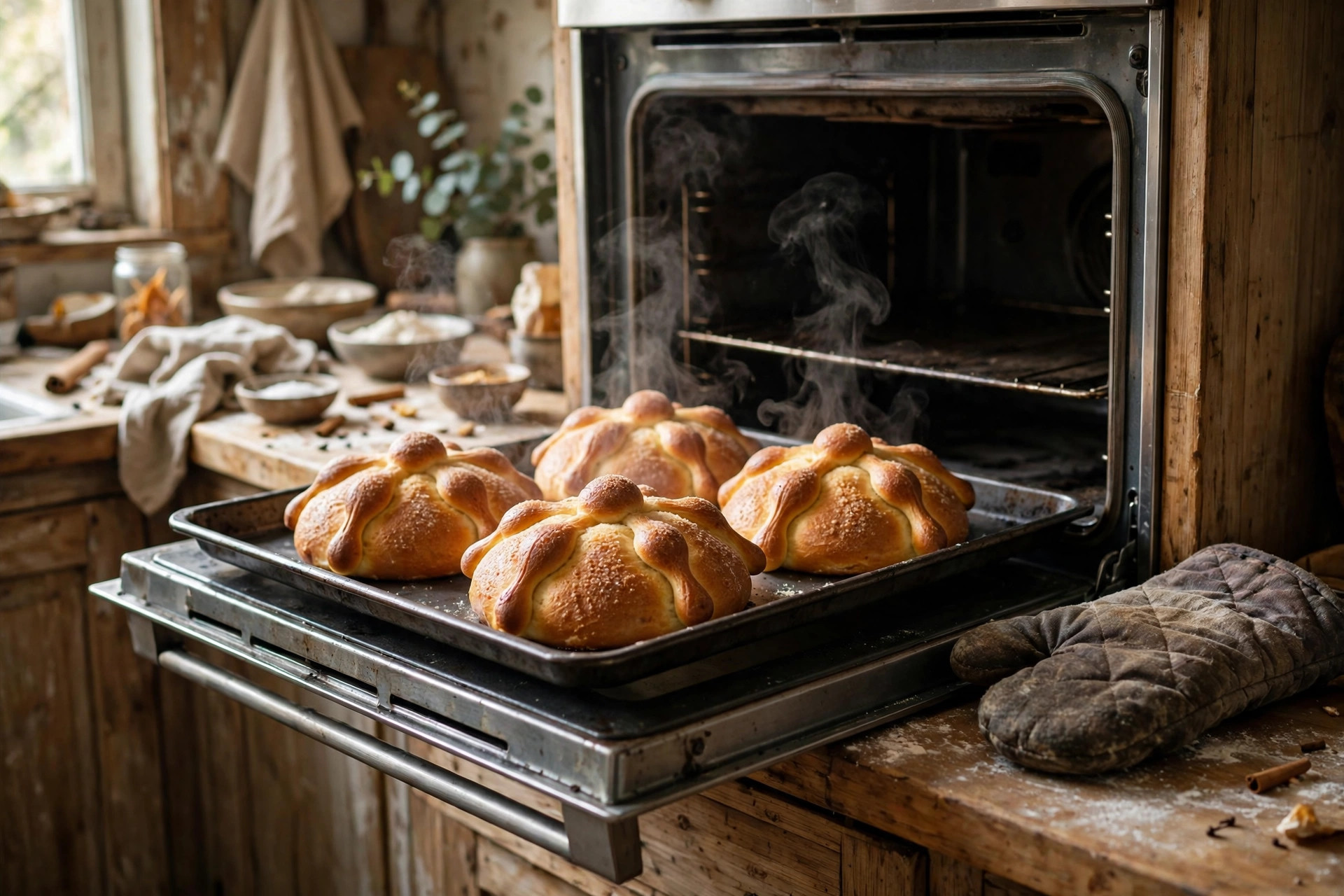
6. Bake, butter, sugar. Bake 25–30 minutes, until the loaves are deep golden and sound hollow when tapped underneath (an instant thermometer reads about 190°F / 88°C in the center). While they are still warm — this part has a deadline — brush them all over with the melted butter and immediately dredge them in the sugar, turning and spooning until they’re frosted white all over. Cool on a rack at least 20 minutes before tearing in. The crumb is still setting, and the first bite deserves better than a gummy center.
After: The Platter
At the Ofrenda
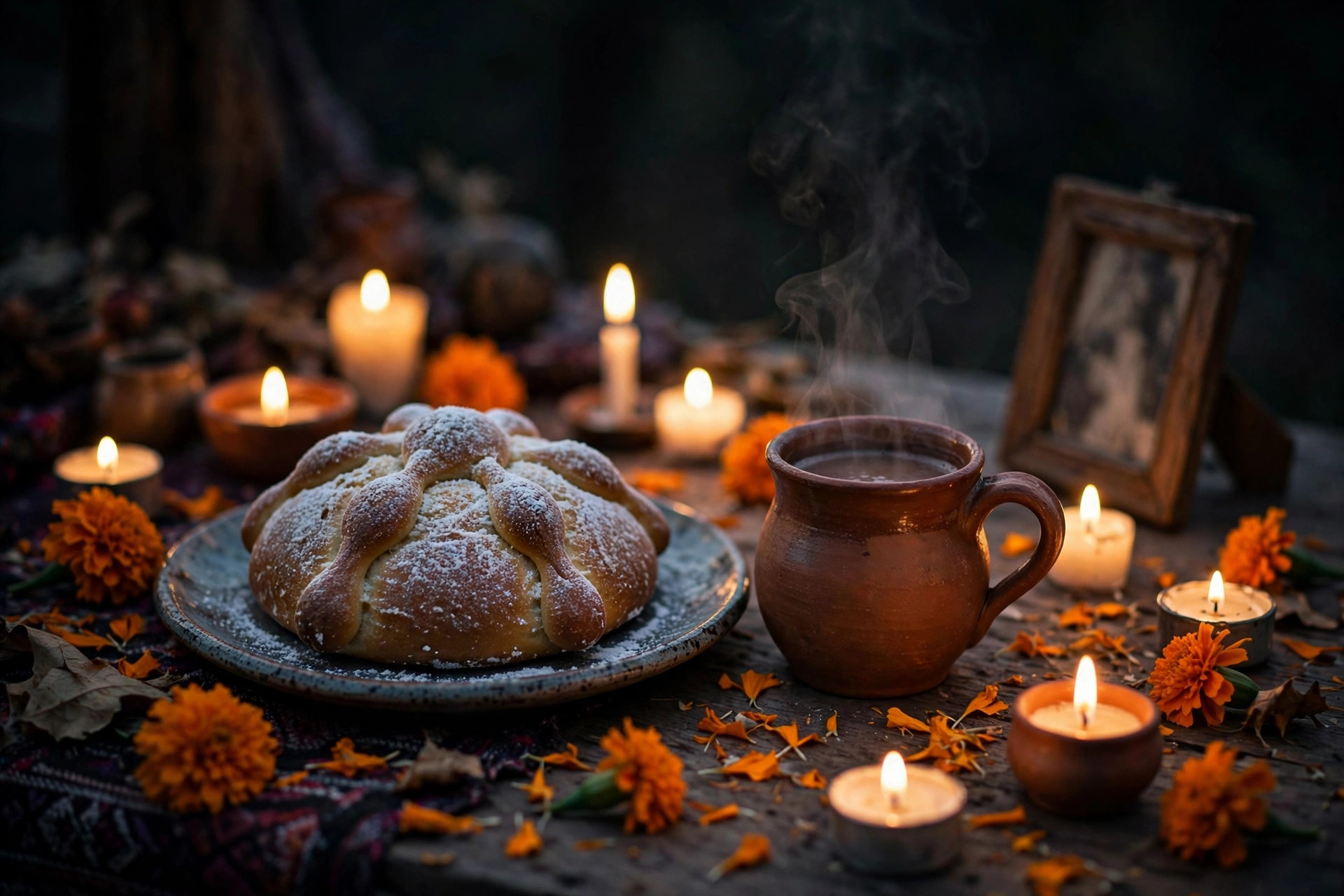
The first loaf is not yours. Set one loaf on the ofrenda — among the marigolds, the candles, the photographs — and leave it there through the night of November 1st into the 2nd, because the dead are fed first and the fragrance is part of the invitation. What remains comes to the table, and there it is torn, never sliced if you can help it, passed hand to hand and eaten with something hot: champurrado, the thick chocolate atole, is the classic partner, and a cup of Mexican hot chocolate — cinnamon, a whisper of chile if your house runs that way — is a close second. Eat the huesitos and argue, gently, about whether they are bones or tears. Both answers have grandmothers behind them.
Cook’s notes
- Don’t rush the rise. Enriched dough is slow dough. A cold kitchen can add a full hour, and that is fine — flavor lives in a slow rise. Warm the (turned-off) oven with the light on if your kitchen is cold, park the bowl inside, and walk away.
- Azahar is a whisper, not a shout. Orange blossom water perfumes fast: a teaspoon scents the whole batch. Past that, the bread starts to taste like perfume, and the spirits you were trying to guide home will politely go elsewhere.
- Sugar sticks only to warm, buttered bread. Do the butter-and-sugar step the moment the loaves can be handled. Cold bread sheds its sugar like snow off a roof, and there is no re-frosting it back to glory.
- Day-old pan de muerto is a second gift. Slice it thick and toast it, or run it through French-toast batter — the orange and anise wake right back up. Some families cube it into bread pudding. The dead understand leftovers; they invented patience.
This column is going to travel — one dish, one culture, one story at a time. Palestine set the table. Mexico left the door open, put marigolds on the path, and set an extra place. Next entry, we see who comes to sit down.
By the Editorial Board


Leave a Reply