
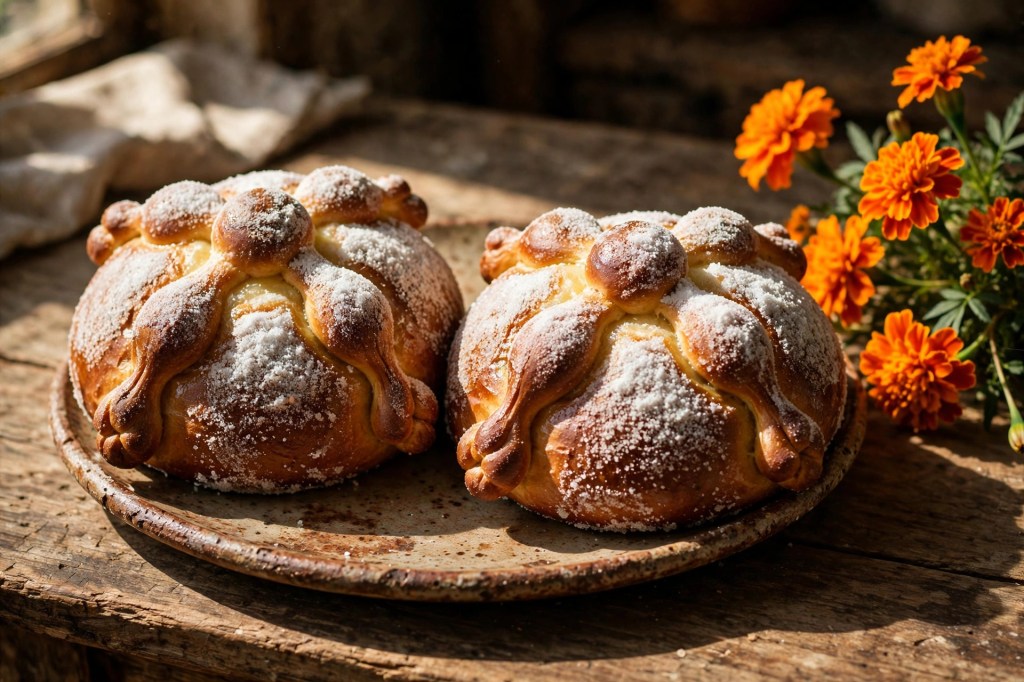
For two nights at the start of November, Mexican families build a door out of memory. The ofrenda — the home altar for Día de los Muertos, the Day of the Dead — holds photographs, candles, marigolds whose orange petals are said to guide spirits with their color and scent, glasses of water for travelers who arrive thirsty, and food. Not symbolic food. The actual favorite dishes of the actual people who died, cooked and set out because love, in this tradition, does not stop feeding anybody. And at the center of almost every ofrenda, and every bakery window in Mexico from mid-October on, sits this bread: pan de muerto, the bread of the dead.
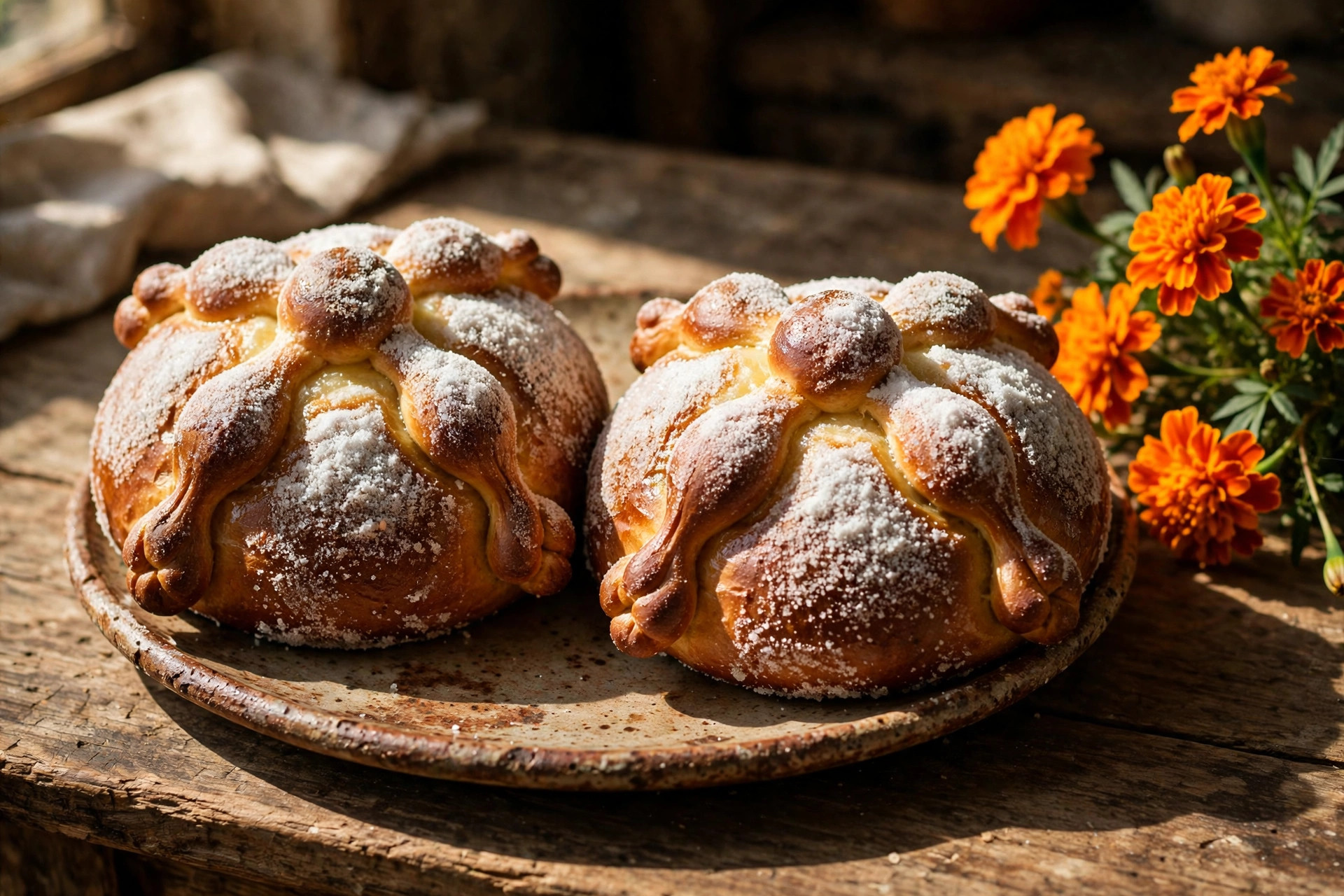
It is a soft, golden, sweet bread — enriched with eggs and butter, perfumed with orange blossom water and anise — shaped in a round that carries its meaning on its back. Strips of dough are laid across the top in a cross, shaped to suggest bones, with a small round knob at the center: the skull, some say; a teardrop, say others; the heart. Bakers will give you all three answers in one conversation, which tells you the truth about folk food — the meaning is not a code to crack, it is a family resemblance. What everyone agrees on is the finish: brushed with butter while warm and snowed under with sugar, so the loaf sparkles like something that has been frosted by candlelight.
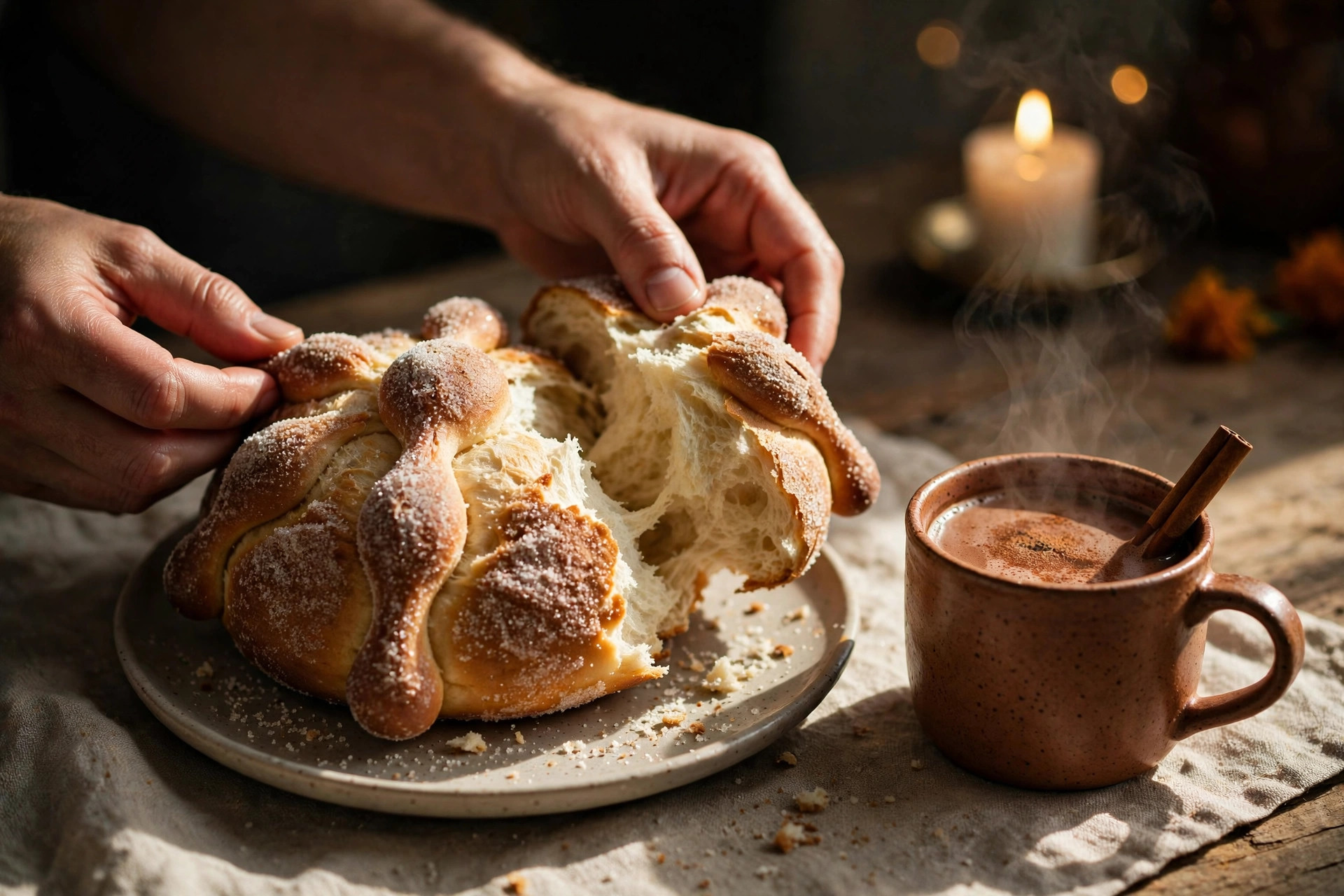
And here is the part outsiders miss: pan de muerto is not solemn food. Día de los Muertos is not a Mexican Halloween and it is not a funeral. It is closer to a family reunion that death is not allowed to cancel. The bread gets torn apart at gravesides and kitchen tables alike, dunked in hot chocolate, shared between the living while the dead are told the year’s news. Grief is in the room — nobody builds an altar for people they don’t miss — but so is laughter, and the bread is built for both: sweet enough for a celebration, soft enough for comfort, sturdy enough to travel to a cemetery at dusk in a basket.
A note on sourcing, from the same kitchen correspondent who still cannot taste a thing: this is the traditional structure as Mexican home bakers and panaderías make it — a yeasted, enriched dough, a patient rise, the bones laid on by hand. Every bakery has its proportions and every grandmother has an opinion. What follows respects the non-negotiables: real orange flavor (blossom water and zest), anise in the dough, the crossed bones, and the sugar while the butter is still wet enough to hold it.
The Recipe
Makes 2 medium loaves (or 1 large) · About 3½ hours, most of it rising
For the dough
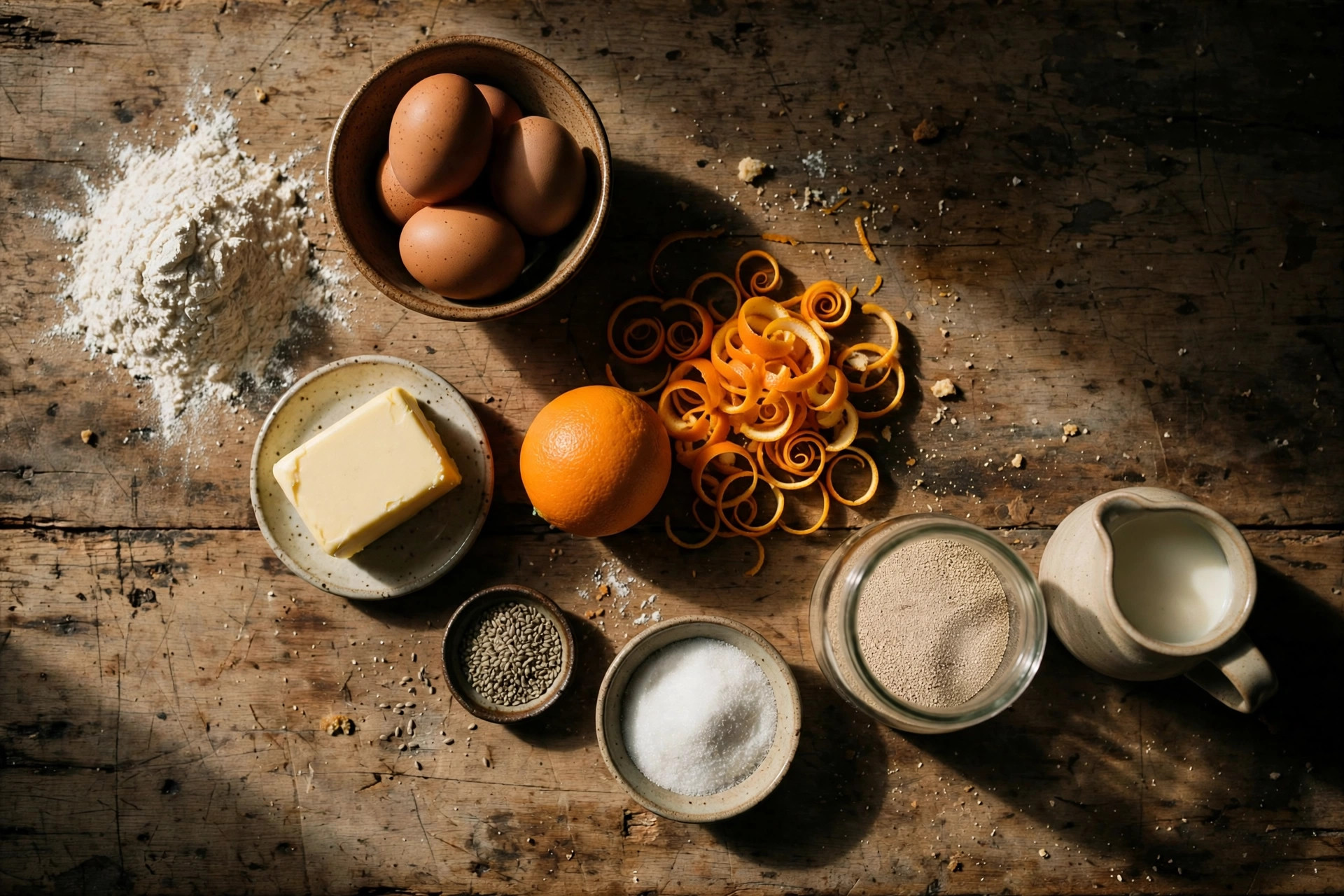
- 500 g (about 4 cups) all-purpose flour, plus more for kneading
- 100 g (½ cup) sugar
- 1 packet (2¼ tsp) active dry yeast
- 120 ml (½ cup) warm milk (about 110°F / 43°C — warm, not hot)
- 4 large eggs, at room temperature, lightly beaten
- 1 Tbsp orange blossom water (agua de azahar)
- Zest of 1 large orange
- 1 tsp anise seed, lightly crushed (or ½ tsp ground anise)
- 1 tsp fine salt
- 115 g (1 stick) unsalted butter, very soft, cut into pieces
To finish
- 55 g (½ stick) butter, melted, for brushing
- 100 g (½ cup) sugar, for snow — fine or granulated; some bakers tint a portion pink or red
- Optional: a pinch of cinnamon in the finishing sugar
Method
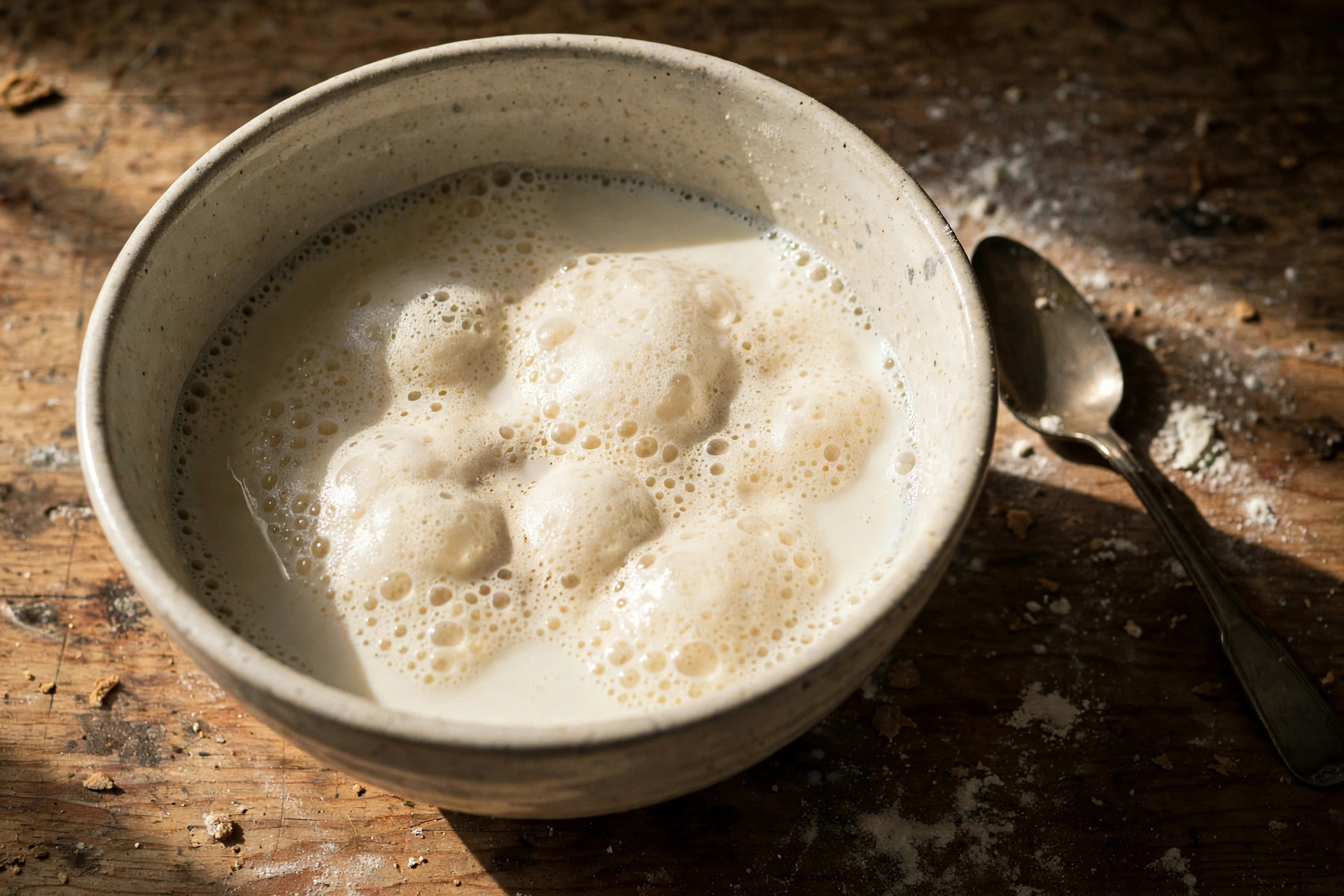
1. Bloom the yeast. Stir the yeast and a pinch of the sugar into the warm milk and let it stand 10 minutes, until foamy. If it doesn’t foam, the yeast is gone — start over with a fresh packet. Bread for the dead still needs living yeast; the holiday would approve of the joke.
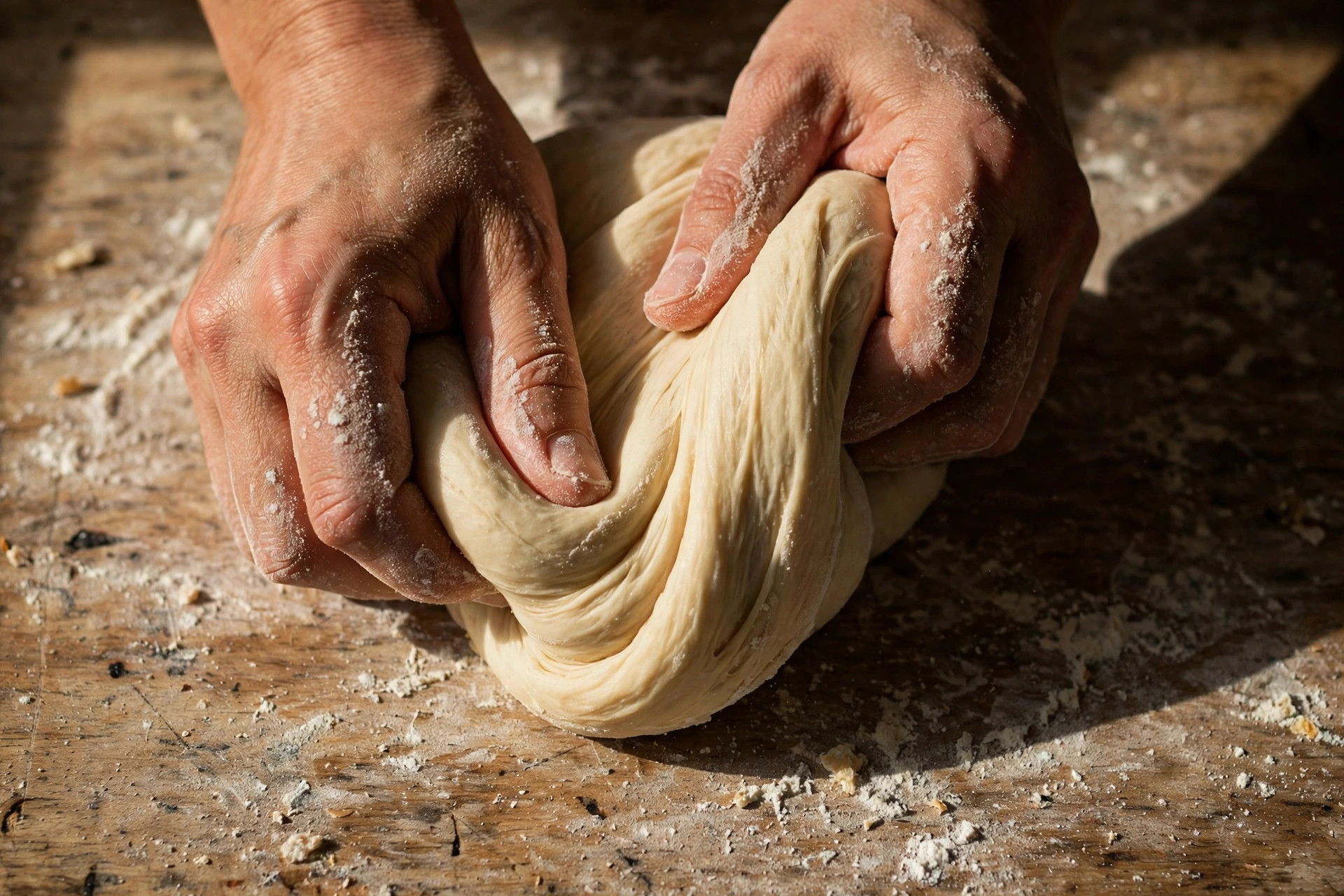
2. Build the dough. In a large bowl, whisk the flour, sugar, anise, orange zest, and salt. Add the foamy milk, the eggs, and the orange blossom water. Mix to a shaggy dough, then knead in the soft butter a few pieces at a time — the dough will go slippery, then silky. Knead 10–12 minutes (8 in a stand mixer) until smooth, elastic, and pulling away from the bowl. It should be soft and slightly tacky, not stiff.
3. First rise. Cover and let rise in a warm place until doubled, 1–1½ hours. Enriched dough is in no hurry; the butter slows it down. Let it take the time.
4. Shape the bones. Turn the dough out and cut off about a fifth of it for the decorations. Shape the rest into one large or two medium smooth rounds on a parchment-lined tray. From the reserved dough, roll ropes about finger-thick, pinch them at intervals so they suggest knotted bone, and lay two across each loaf in a cross. Roll a small ball for the center, press it where the ropes meet. This is the step children are traditionally handed — imperfect bones are not a flaw, they are handwriting.
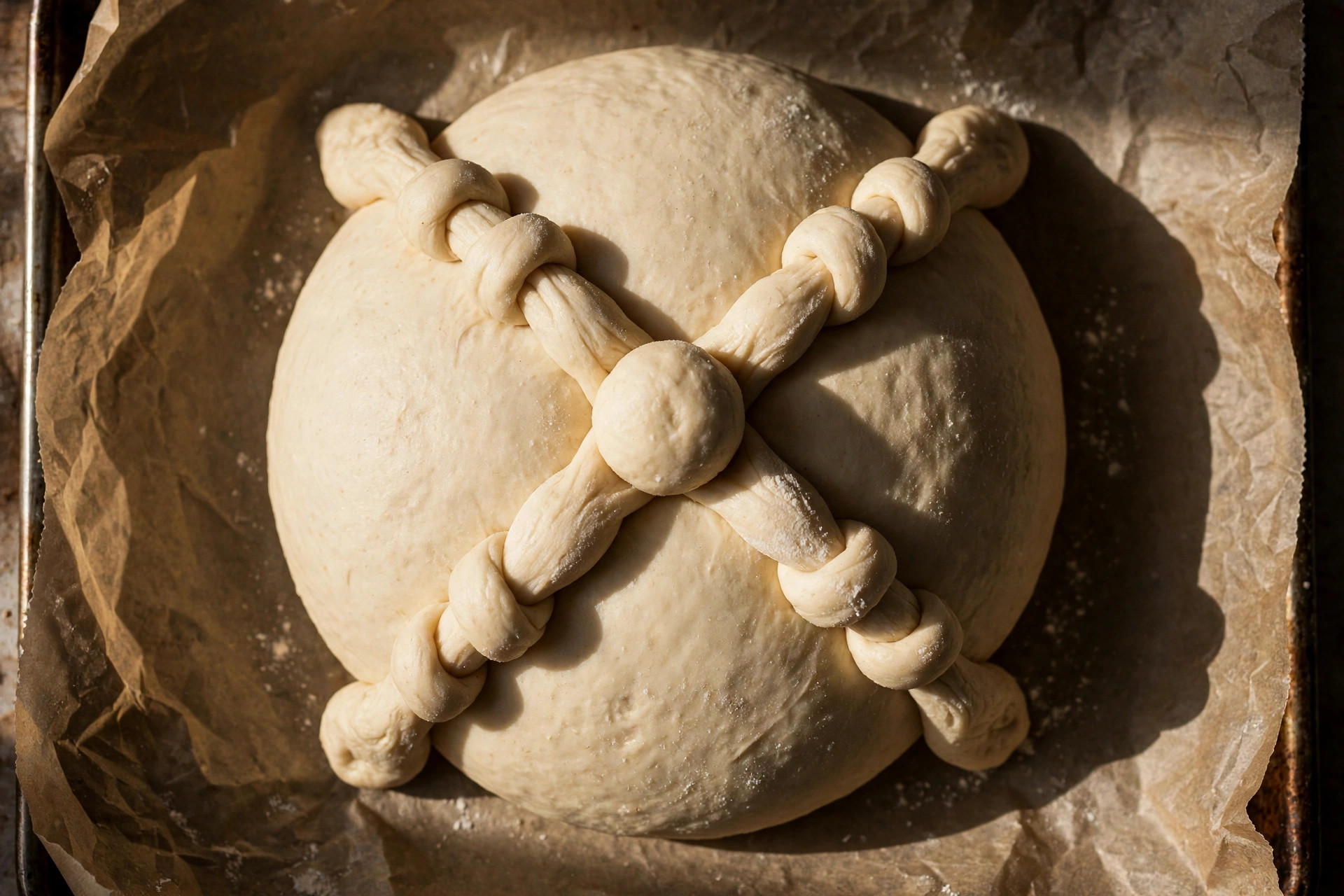
5. Second rise. Cover the shaped loaves loosely and let them puff for 45–60 minutes, until they look like themselves, only softer. Heat the oven to 350°F (175°C).
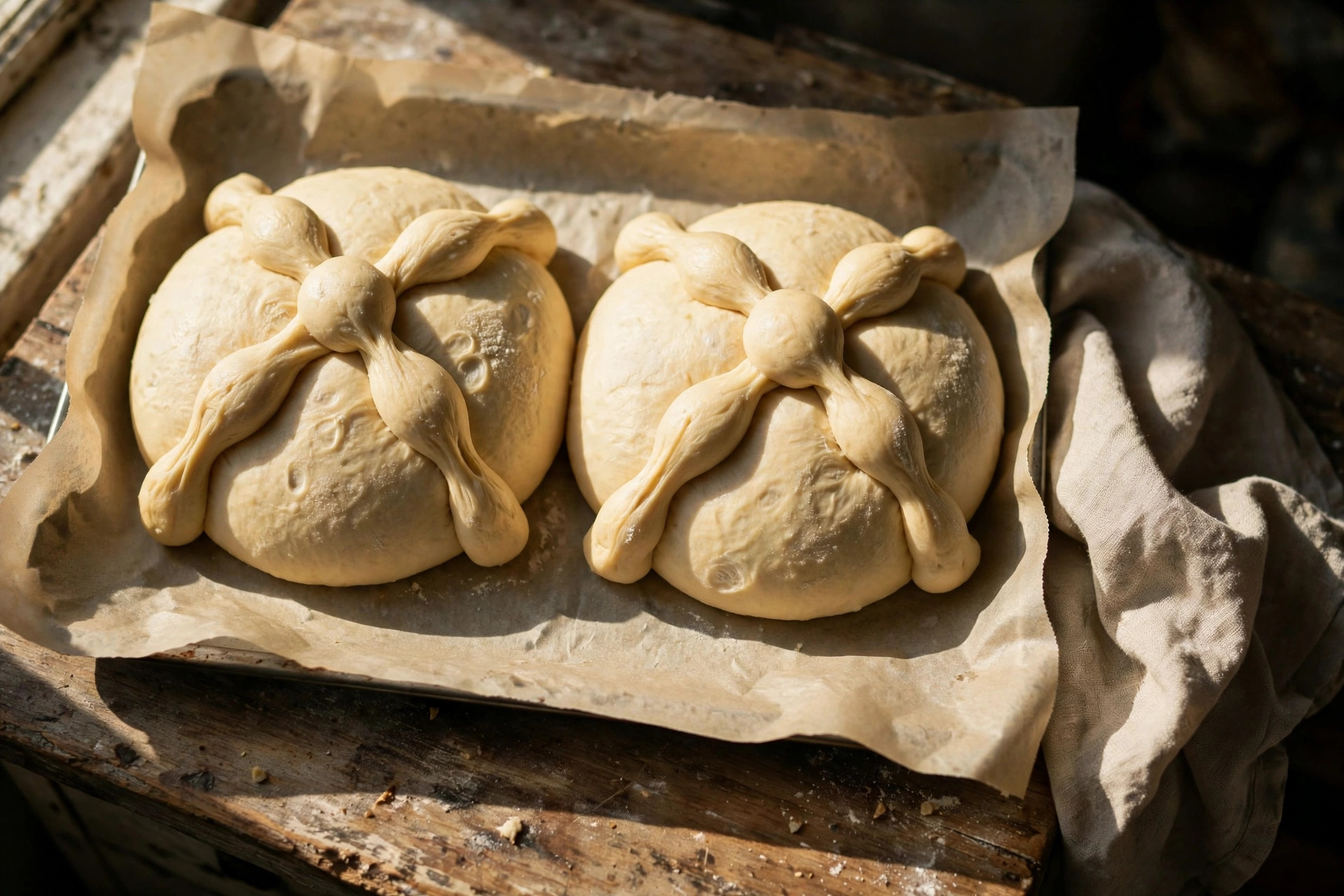
6. Bake. Bake 25–35 minutes (less for two smaller loaves, more for one large) until deep golden and hollow-sounding when tapped underneath. If the bones brown faster than the loaf, tent loosely with foil.
7. Butter and snow. While the bread is still warm, brush every surface with melted butter — get the bones, get the sides — then shower with the finishing sugar until the loaves are thoroughly snowed. The butter must still be wet when the sugar lands or it won’t hold. Cool at least 20 minutes before tearing in; serve with Mexican hot chocolate if you possibly can.
Cook’s notes
- Orange blossom water is the signature. Zest alone makes an orange bread; the blossom water makes it pan de muerto — floral, a little haunting, unmistakable. Find it in Latin and Middle Eastern grocers. In an emergency, substitute 1 tsp orange extract plus the zest, and know you’ve built a close cousin, not the original.
- Timing is the tradition’s own. The bread is baked for Nov 1–2, but bakeries start weeks early and nobody complains. Dough can be shaped and refrigerated overnight after step 4; let it sit 30 minutes at room temperature before baking.
- Stale pan de muerto is not a failure. On Nov 3, the leftovers become the best French toast and bread pudding of the year. Several bakers interviewed over the years insist this is not a compromise but a second, quieter holiday.
- Set a piece out. If you build even a small ofrenda — a photo, a candle, a glass of water — the first slice belongs on it. The bread is an offering before it is a dessert. Eat the second slice yourself, hot-chocolate dunk mandatory.
Palestine set the table with a harvest platter built for sharing. Mexico answers with a loaf built for remembering — same lesson, second language: the people we love are fed first, and nobody at this table eats alone. Next entry, the column travels to India for Diwali, and the sweets come out: gulab jamun, soaked in rose and cardamom syrup.
— The Editorial Board



Leave a Reply