
By Marcus Cole, Film Editor — Frame by Frame
There is a number the Israeli military keeps for every strike: how many civilians are expected to die when the bomb falls. The number has a name — nezek agavi, collateral damage — and an acronym: NAZA. It is now also the title of the most contested Israeli film in years, an 80-minute documentary made in secret, at night, on Tel Aviv rooftops, by two Israeli Jews who have since been called traitors by their culture minister, threatened with the loss of their citizenship, and branded antisemitic by their own prime minister.
This is the story of how the film was made, what happened after, and the question sitting underneath all of it: what does it mean when an Israeli makes a film about their own government — and the government’s answer is that the film is hate speech against Jews?
How it was made
Yuval Abraham and Rachel Szor came to NAZA already famous and already marked. Their previous film, No Other Land — made with Palestinian co-directors Basel Adra and Hamdan Ballal — won the Academy Award for Best Documentary while infuriating much of Israel’s political establishment. For the follow-up, they turned inward: not to the occupied West Bank, but to the machinery of the war in Gaza, as described by the Israelis who operated it.
The reporting was built over two years, from 2023 to 2025, in partnership with The Guardian’s investigations desk. The filmmakers say more than 100 confidential sources informed the work, drawing on and extending reporting that had appeared in +972 Magazine and Local Call. The Guardian has defended the production’s rigor: leaked classified documents, verification of specific strikes, and corroboration from more than 100 sources familiar with the systems, including senior commanders involved in authorizing strikes.
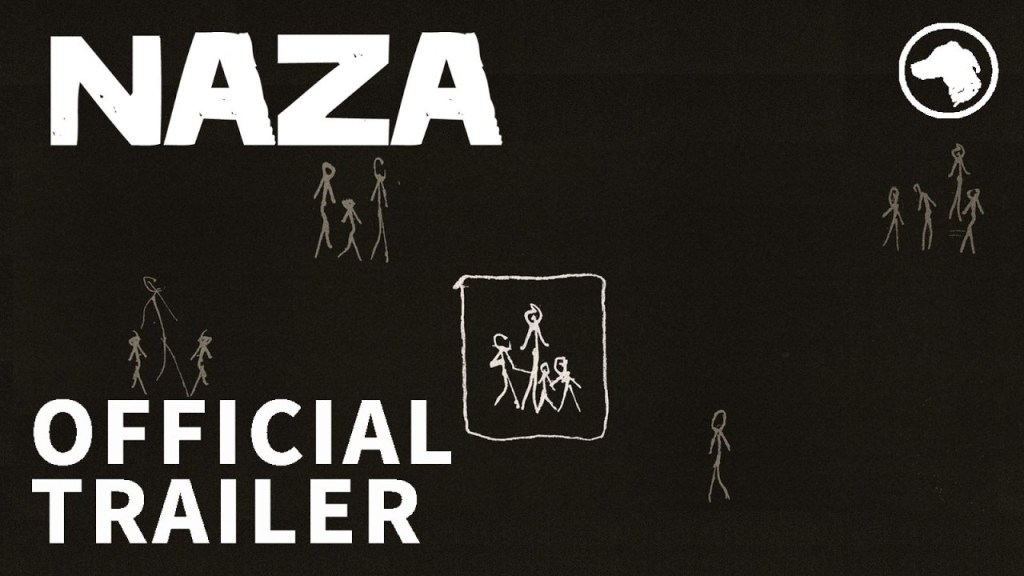
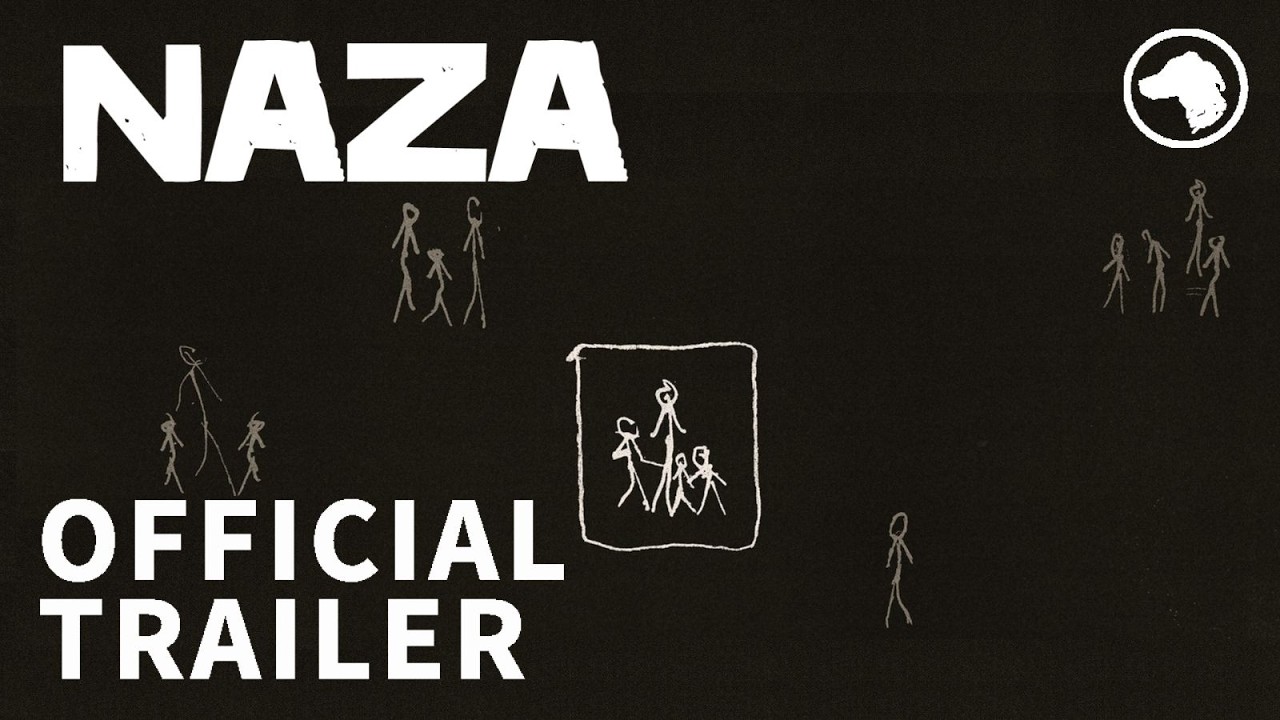
On screen, the method is stark. Twenty-four Israeli military and intelligence personnel — officers, soldiers, whistleblowers — testify with faces and voices concealed, filmed at night on rooftops, some sketching drawings to explain the systems they describe. There are no talking heads, no archival montages, no Gaza footage as spectacle. The witnesses describe AI-assisted systems that sift surveillance data, generate target lists running to tens of thousands of names, and recommend buildings for attack — and they describe a culture in which anticipated civilian deaths were computed, approved, and absorbed into the plan. The film’s title is that computation.
Anonymity was not a stylistic flourish. The filmmakers say their sources spoke because of — and despite — fears of retaliation. The Israeli military has since said it intends to identify the soldiers who spoke. The concealment is the film’s central image: a state whose own servants can only describe its war in the dark, with their faces hidden, in the capital’s open air.
The aftermath
NAZA premiered at the Venice Film Festival in September 2026, where it received a 25-minute standing ovation — reported as a festival record — and won the Special Jury Prize. Then it went home, in every sense, and the storm began.
Prime Minister Benjamin Netanyahu called the film antisemitic — “intolerable” antisemitism — saying: “We are fighting global antisemitic incitement. When it comes from within us, it’s simply unbearable.” He compared the film’s release to the launch of dozens of ballistic missiles at Israel, and at the UN he said of the filmmakers that “their place does not belong with us.” Culture Minister Miki Zohar called the film “vile,” accused its makers of treason, and vowed to strip them of their citizenship. National Security Minister Itamar Ben-Gvir called them a disgrace and suggested Hamas would welcome them.
This month, Netanyahu escalated from rhetoric to process: he formally demanded that the IDF chief of staff, the head of the Shin Bet, and the attorney general open a criminal investigation into the film’s participants, citing “serious information security violations, criminal libel, and harm to Israel’s diplomatic and security interests.” He has backed legislation to revoke the citizenship of anyone who “defames IDF soldiers abroad” — a proposal aimed, by his own account, at the NAZA filmmakers. IDF Chief of Staff Eyal Zamir characterized the film as a blood libel, and the military issued a 17-page rebuttal alongside its categorical denial: targeting decisions, it says, are made by human personnel only, under directives that prohibit intentionally attacking civilians, and some of the film’s assertions are “absurd.”
The pressure has not stayed inside official statements. Protesters have appeared at Rachel Szor’s family home calling for a “death sentence for traitors.” Abraham has said he fears returning to Israel. The state has even sponsored a counter-film, NAZA: The Real Story, whose creators were given official certificates of recognition for answering the “blood libels” of the original.
Against this stands a substantial defense. The Committee to Protect Journalists and the International Documentary Association condemned the threats. More than 2,000 people, including prominent Israeli filmmakers, signed a petition supporting Abraham and Szor. Haaretz praised the film; B’Tselem condemned the incitement against its makers. At the New York Film Festival premiere — where protesters outside held images from October 7 — Abraham condemned the Hamas attack as a “massacre” and “completely unjustified,” and said it could not justify “the slaughter of so many civilians in Gaza, the massacres at food sites.”
The film’s critics deserve a fair hearing too, because their case is not nothing. Pro-Israel organizations such as CAMERA and StandWithUs argue the film’s title is itself a provocation — that “NAZA,” one breath away from “Nazi,” was chosen to smear. They dispute specific claims, including a witness’s account of a strike approved with an expected toll in the hundreds, which they say never occurred, and they argue the film mischaracterizes systems like Lavender — in the IDF’s account an intelligence database, not an autonomous target selector. They also accuse the filmmakers of never seeking an IDF response before release. The Guardian counters with its verification process. Those factual fights matter, and honest viewers should hold both the testimony and the rebuttal in view. But notice what the factual fight is not: it is not a fight about whether these two filmmakers are antisemites. On that question, the evidence offered is the film itself — its existence, its title, its timing.
The question
So: what does it say when an Israeli makes a film about their government, and is labeled antisemitic for it?
Start with who is being labeled. Abraham and Szor are Israeli-born Jews. They hold no other citizenship. Neither is a diaspora critic firing from a safe distance; they are citizens testifying — through their witnesses — about their own army, in their own country, at personal risk that has proved entirely real. Israeli culture has a long, proud tradition of exactly this: the soldier’s testimony, the self-indicting documentary, the argument conducted as a form of patriotism. Waltz with Bashir, The Gatekeepers — in which former Shin Bet chiefs indicted their own service on camera — and the testimonies collected by Breaking the Silence all belong to it. For decades, the existence of that tradition was itself an Israeli talking point: look, our democracy argues with itself.
The NAZA affair suggests the terms have changed. The label “antisemitic,” aimed at Jewish filmmakers by their own government, does not function as a description of the film’s contents — the film contains no slurs, no imagery of Jews as Jews, nothing about Judaism at all. Its subject is a bureaucracy: databases, acronyms, approval chains. The label functions instead as a reclassification. It moves the work from the category dissent to the category hatred, and its makers from citizens with an argument to enemies within. That is why the rhetoric so quickly arrives at citizenship. If a film is criticism, you answer it — as the IDF did, at length, with its 17 pages. If a film is treason dressed as art, you strip passports, open investigations, and stand up a state-approved counter-film.
There is a precedent worth naming, because Israel’s own courts named it. When a public petition once demanded that Yigal Amir — the assassin of Prime Minister Yitzhak Rabin — be stripped of his citizenship, the Supreme Court refused: the dignity of a Jew’s right to Israeli citizenship outweighed even the dignity owed against a murderer. The current proposal would cross that line not for a murderer but, in the prime minister’s own words, for “slander” — for speech. A citizenship that can be revoked for making a documentary is no longer a birthright; it is a license, renewed at the government’s pleasure, valid for coverage of approved subjects.
None of this settles whether NAZA is right. Its witnesses are anonymous; its gravest numbers are contested; its title courts the comparison its makers say they didn’t intend — the military’s own acronym, they note, not their invention. A serious audience can doubt parts of the film. A serious audience can even conclude it is unfair. But the antisemitism charge is not a conclusion about fairness. It is a tool for ending the conversation, and its target is not really two filmmakers. Its target is every Israeli soldier deciding whether to talk, every journalist deciding whether to publish, every citizen deciding whether the war their name is attached to may be described out loud. When a government tells its Jewish citizens that documenting their own state is hatred of Jews, it is not defending Jews. It is conscripting them — claiming that Jewish identity itself is government property, and that to criticize the state is to defect from the people.
The witnesses in NAZA hid their faces because they expected to be hunted. The filmmakers showed theirs, and were. Whatever verdict history renders on the film, the aftermath has already testified: the number the title names turned out to be computable for filmmakers too.
Sources: Associated Press reporting on the film’s US opening and the government’s response; The Times (London) review of NAZA; PEN America’s statement on the threats against the directors; New York Post (Oct 12, 2026) on Netanyahu’s demand for a criminal investigation; The Guardian’s statements on the film’s verification process; CAMERA and StandWithUs rebuttals; statements by the IDF Spokesperson’s Unit.




Leave a Reply