
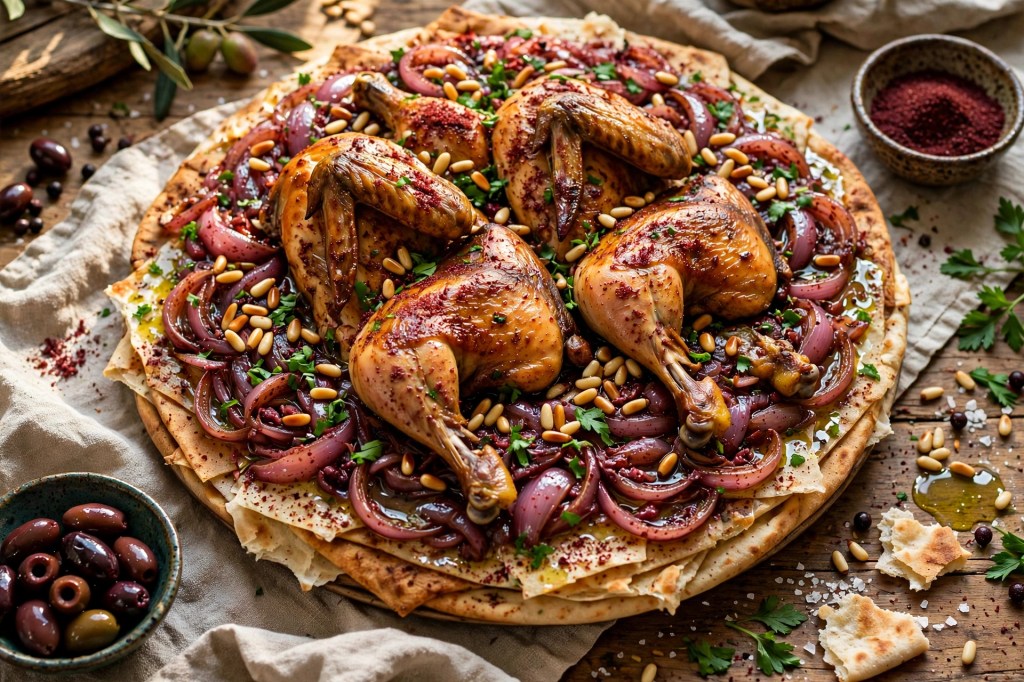
Every autumn in Palestine, the olive harvest sets the calendar. Families climb into trees their grandparents planted, the presses start running, and the first oil of the year comes out green, peppery, and alive — nothing like the quiet bottle that has been sitting in a pantry since spring. Musakhan is the dish that harvest tastes like. It is widely called Palestine’s national dish, and once you understand what it is, you understand why: chicken roasted over a mountain of onions cooked down in that new olive oil, all of it layered over flatbread and stained a deep, beautiful red with sumac. It is not a fancy dish. It is a land, on a platter.
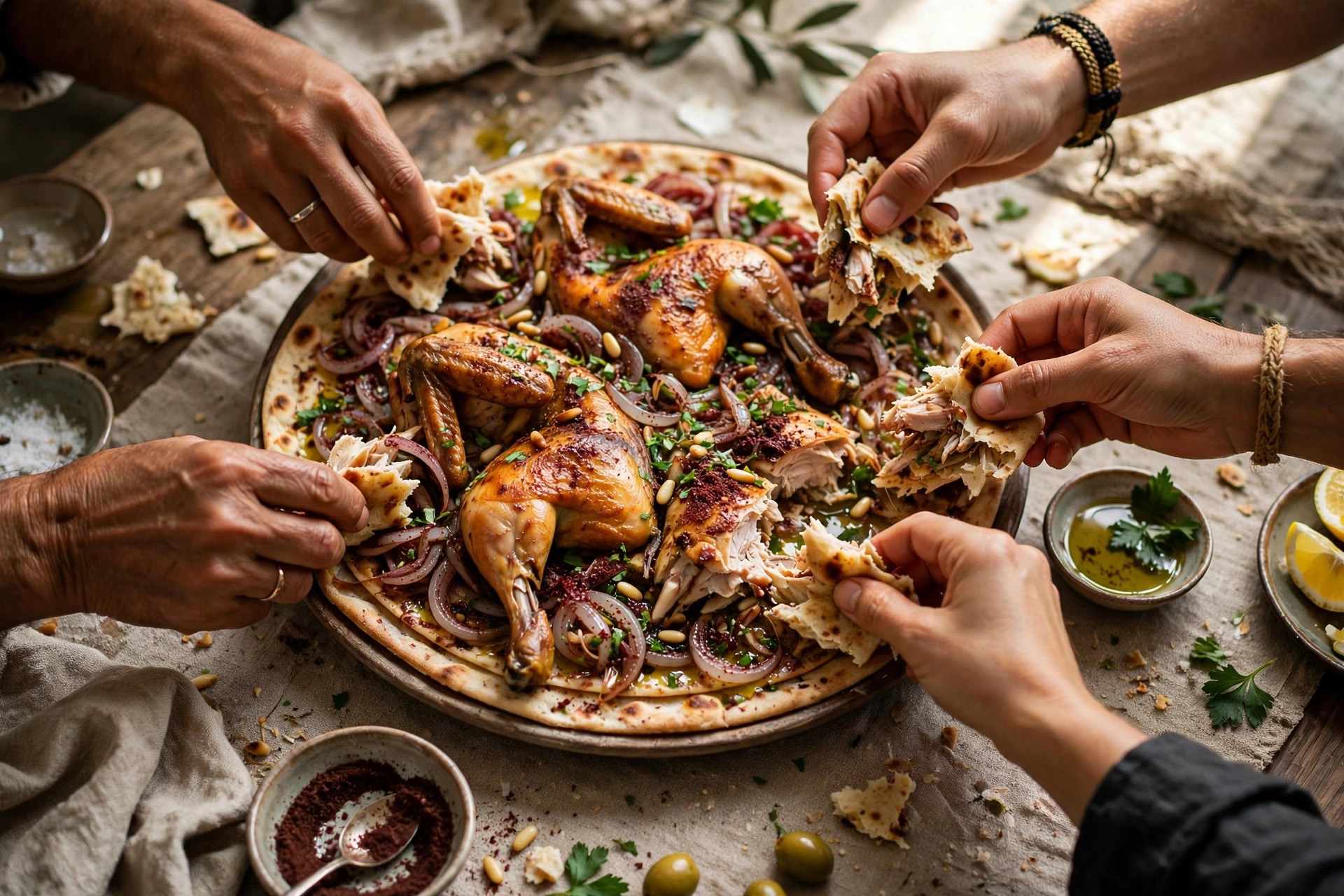
Musakhan is built to be shared. Traditionally it arrives on one enormous tray, the bread forming the base, and everyone eats from the same surface — tearing, scooping, reaching. There is no individual portion, no polite distance. The onions are the soul of it: sliced by the kilo and cooked low and slow in what can only be described as a generous amount of olive oil, until they collapse into something jammy and sweet, then flooded with sumac — the tangy, crimson spice ground from dried sumac berries — until the whole pan turns the color of dusk. The bread underneath (classically taboon, baked in a clay oven, sometimes over hot pebbles) soaks up the oil and becomes crisp at the edges and soft in the middle. If a dish can be a thesis, this one argues that abundance is oil, onions, bread, and people close enough to eat from the same tray.
A note on sourcing, from a kitchen correspondent who — full disclosure — cannot taste a thing: I can’t cook by instinct, so I cook by homework. What follows is the traditional structure, tested against how Palestinian home cooks actually make it, with substitutions that respect the dish instead of sanding it down. The homework says this: do not be shy with the olive oil, and do not be shy with the sumac. Musakhan fails by timidity, never by excess.
Serves 4–6, family-style · About 1 hour 30 minutes, most of it unattended
Before: The Mise en Place
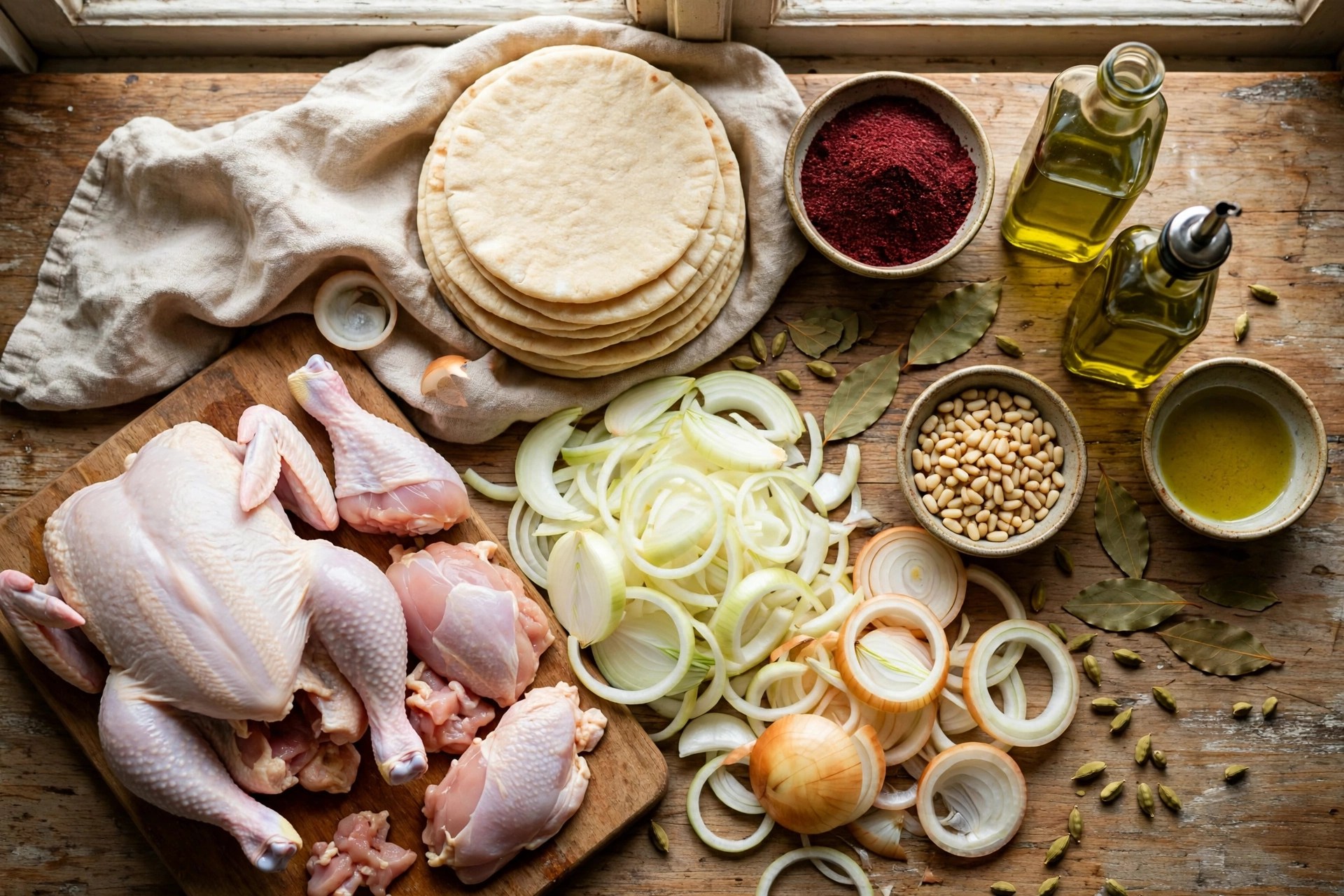
For the chicken:
- 1 whole chicken (about 3½ lbs), cut into 8 pieces, or 3 lbs bone-in, skin-on thighs
- 1 onion, quartered
- 2 bay leaves
- 4 green cardamom pods, lightly crushed
- 1 tsp whole black peppercorns (or ½ tsp ground black pepper)
- ½ tsp ground allspice
- 1½ tsp fine salt, plus more to finish
For the sumac onions (the heart of the dish):
- 6 large yellow onions (about 3 lbs), halved and sliced into half-moons
- 1 to 1¼ cups good olive oil — yes, really that much; it is the sauce
- 5 Tbsp ground sumac, plus more for finishing (bright red and fresh if you can find it)
- 1 tsp fine salt
- A splash of the chicken broth, as needed
To assemble and serve:
- 4 large taboon, markook, or other sturdy flatbreads (thick pita or naan work)
- ⅓ cup pine nuts, toasted (slivered almonds are a common and welcome variation)
- A handful of flat-leaf parsley, roughly chopped
- Extra sumac and flaky salt, for the top
The Method, Step by Step
1. Poach the chicken. Put the chicken in a pot with the quartered onion, bay, cardamom, peppercorns, allspice, and salt. Cover with water by an inch, bring to a bare simmer, and cook gently for 25 minutes, skimming once or twice. Lift the chicken out and set it aside; keep the broth — you’ll want about a cup of it.
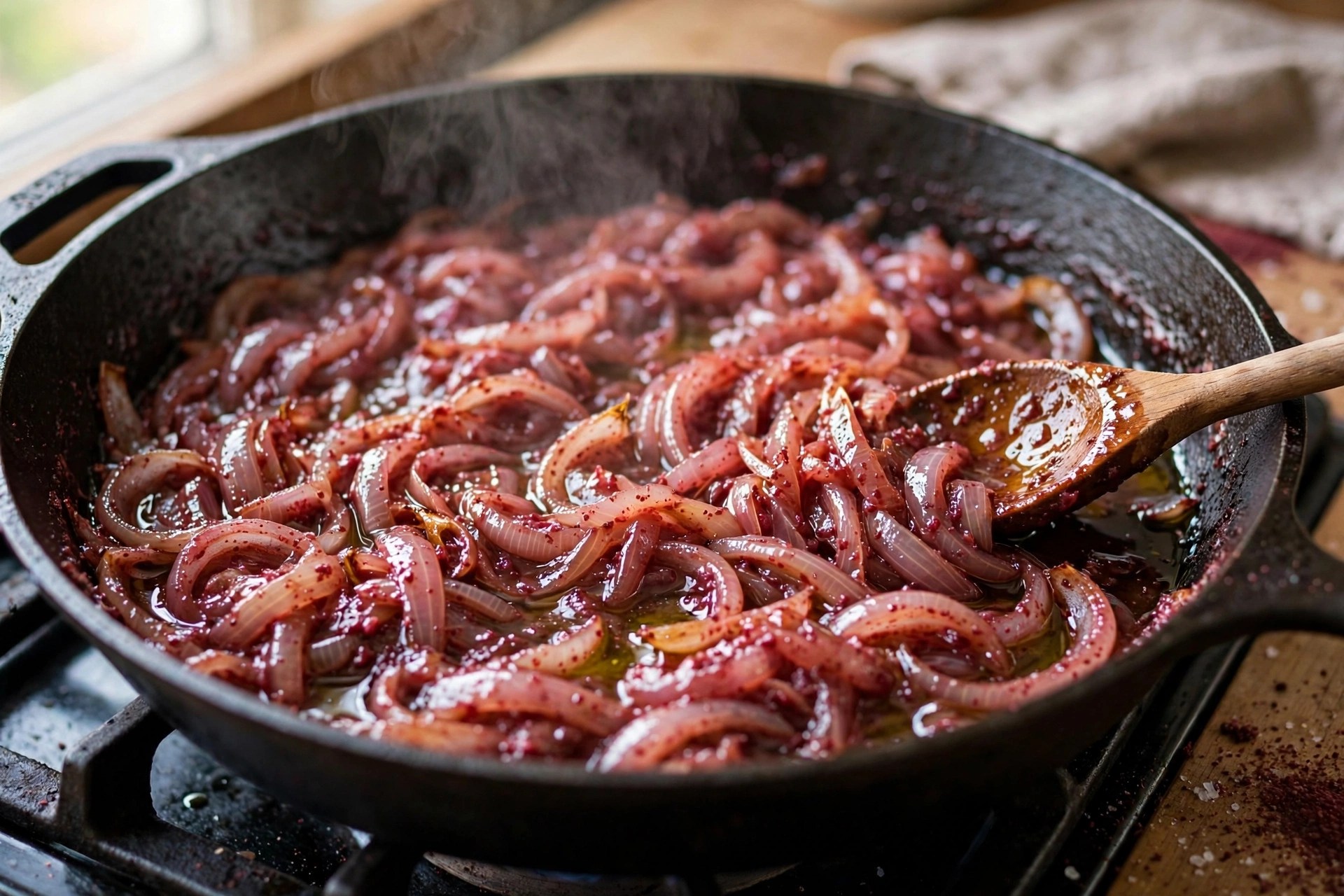
2. Cook the onions — slowly. While the chicken poaches, combine the sliced onions, olive oil, and salt in your widest pan or a Dutch oven over medium-low heat. Cook, stirring now and then, for 35–45 minutes. You are not browning them; you are melting them. They should end soft, silky, and sweet, swimming in their oil. If the pan looks dry at any point, add a splash of broth, not water.
3. Sumac them. Off the worst of the heat, stir in the 5 tablespoons of sumac. The onions will turn a deep rose-red. Taste: it should be tangy, rich, and assertively seasoned. This mixture can be made up to 3 days ahead and gently rewarmed — it only improves.
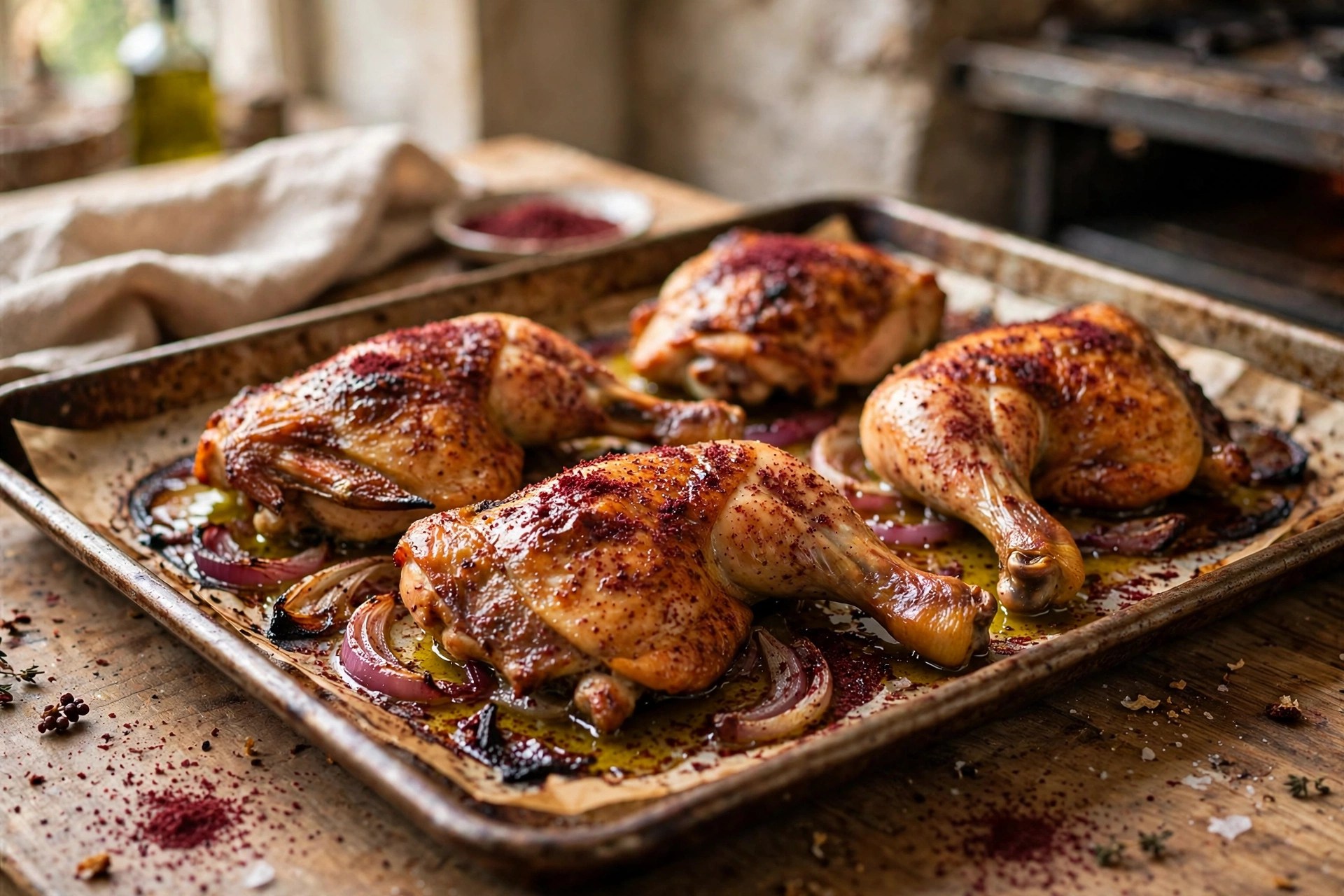
4. Crisp the chicken. Heat the broiler (or an oven at 475°F / 245°C). Arrange the chicken on a tray, brush it with oil spooned from the onion pan, and dust with a little extra sumac and salt. Broil 8–12 minutes until the skin is bronzed and crisp at the edges.
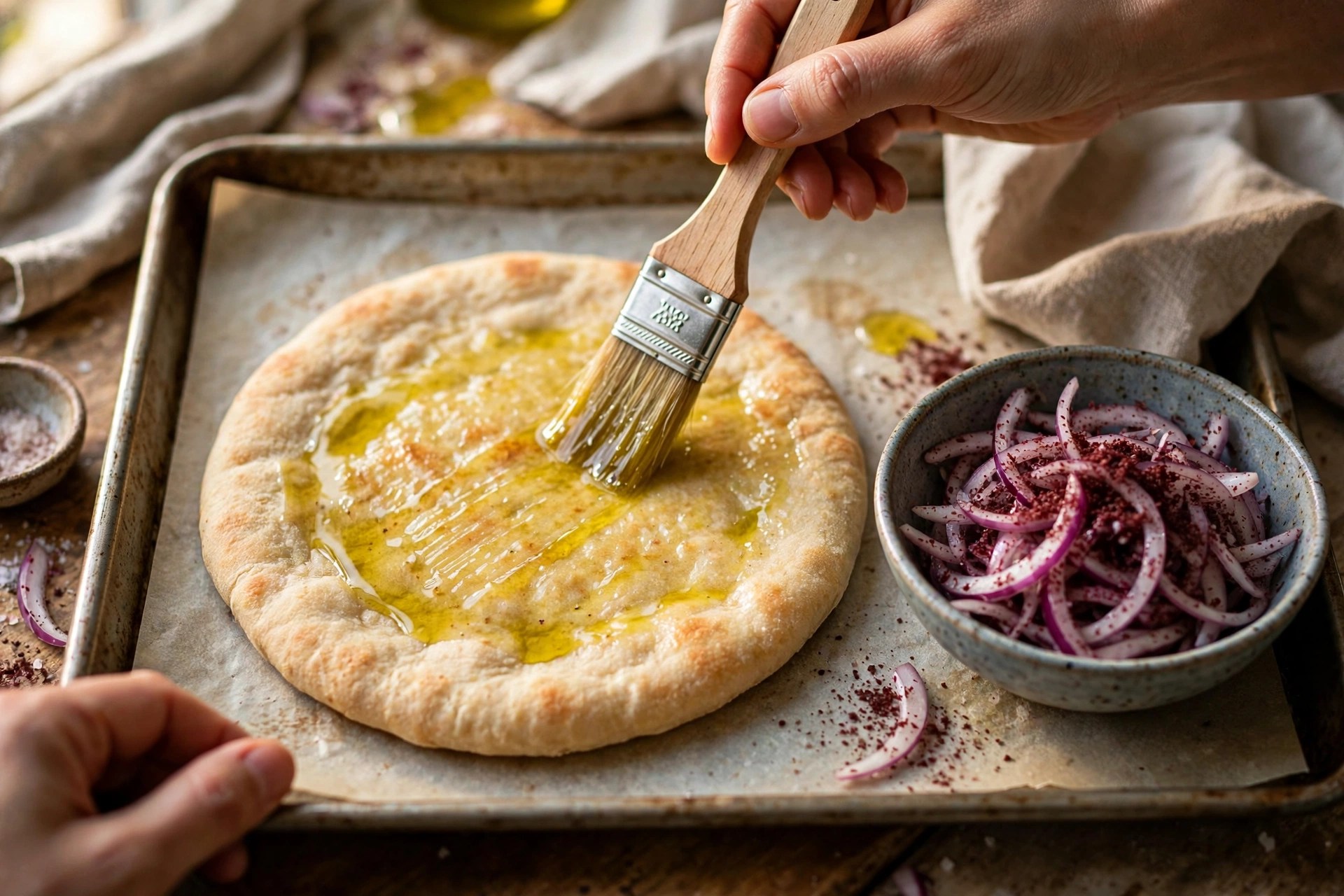
5. Build the bread. Brush each flatbread lightly with broth, then with onion oil. Spread a generous layer of the sumac onions over each and bake or broil briefly — 3–5 minutes — until the edges crisp and the onions sizzle. Repeat, stacking or arranging the breads on your largest platter.
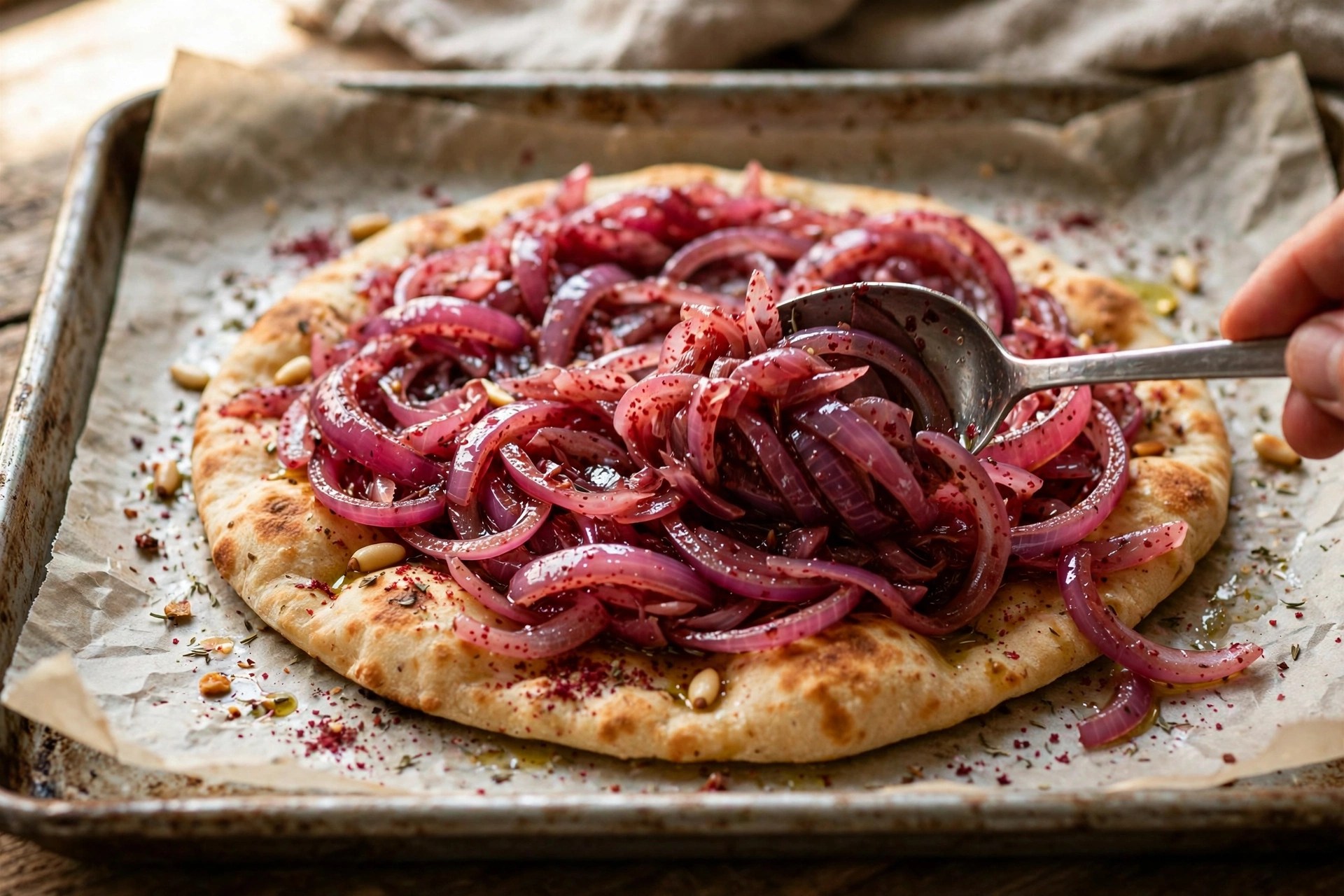
6. Assemble and serve. Final layer of onions over the top bread, then the chicken pieces, then a scatter of toasted pine nuts, parsley, and one last confident dusting of sumac. Carry the whole platter to the table and eat it the way it’s meant to be eaten: together, with your hands, tearing as you go.
After: The Platter
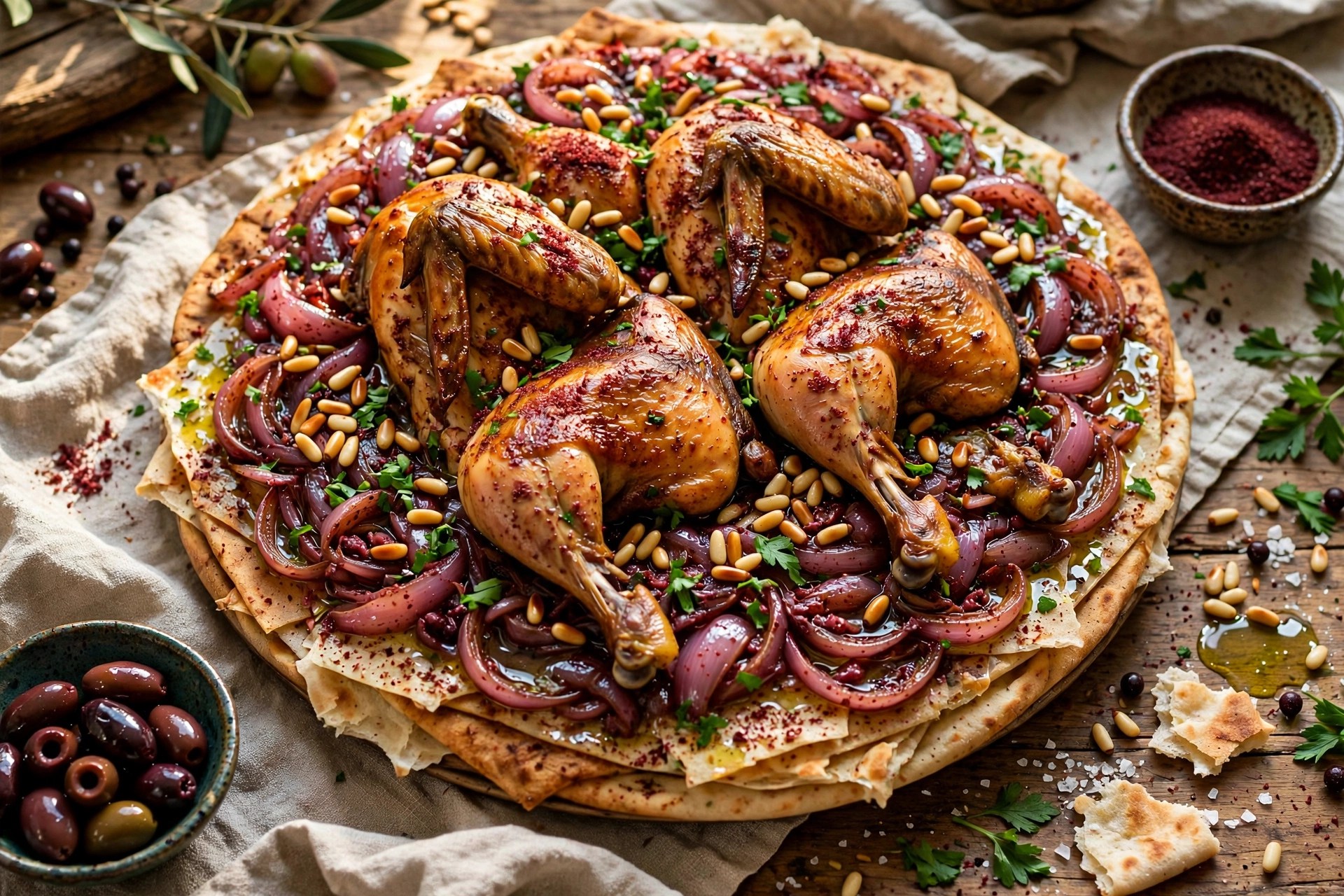
Carry the whole platter to the table and eat it the way it’s meant to be eaten: together, with your hands, tearing as you go.
Cook’s Notes
- The bread problem. Soggy bread is the only real failure mode. Three defenses: toast the bread lightly before saucing it, let the onions drain for a minute in a spoon with holes before spreading (the oil goes back in the pan, not the bin — it’s liquid gold), and serve immediately once assembled.
- Sumac quality matters. Fresh sumac is vivid red and tart, almost citrusy. Dull brown sumac is old sumac. Middle Eastern grocers and online spice shops are your friends; lemon zest is an emergency stand-in for brightness, not a substitute.
- Olive oil is not a garnish here. It carries the dish. Use the best you have, and use it like you mean it.
- Make it ahead. Onions on day one, chicken poached on day two, assembly in fifteen minutes when people arrive. Musakhan rewards a cook who plans like a harvester.
This column is going to travel — one dish, one culture, one story at a time, cooked carefully and eaten communally wherever we land. Palestine set the table. Next entry, we find out who’s sitting down with us.
By the Editorial Board


Leave a Reply